
Ghavaniska System
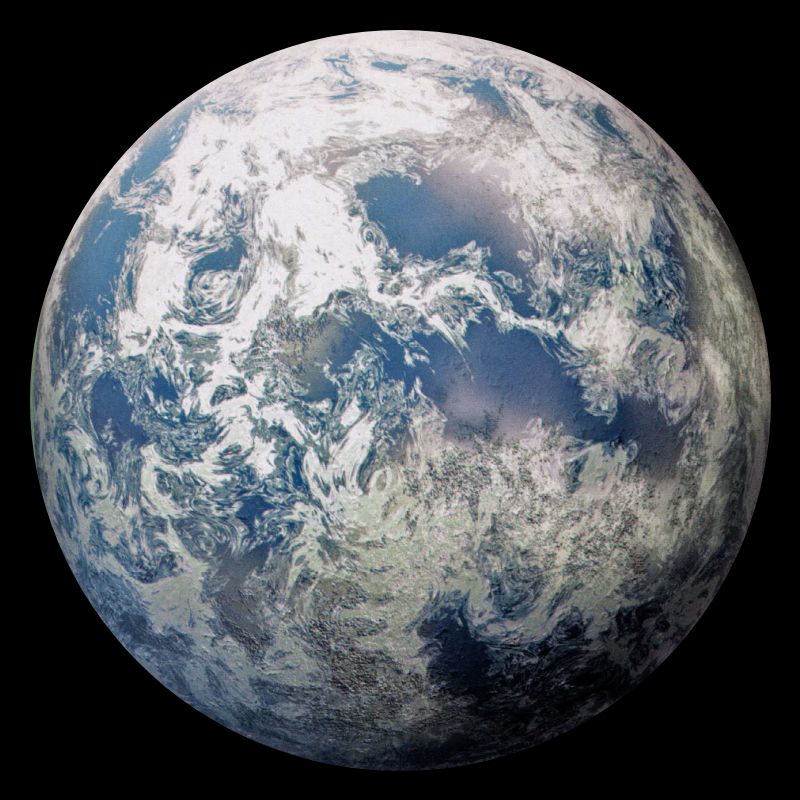
A solar system in Near Space consisting of eight planets orbiting the blue star Ghavaniska. It makes up the core territory of the Veskarium, and is the closest inhabited Near Space system to the Pact Worlds system. All the planets are part of the Veskarium except for Pulonis, which gained independence and then joined the Pact Worlds government in 325 AG.
CELESTIAL BODIES (10)
Ghavaniska
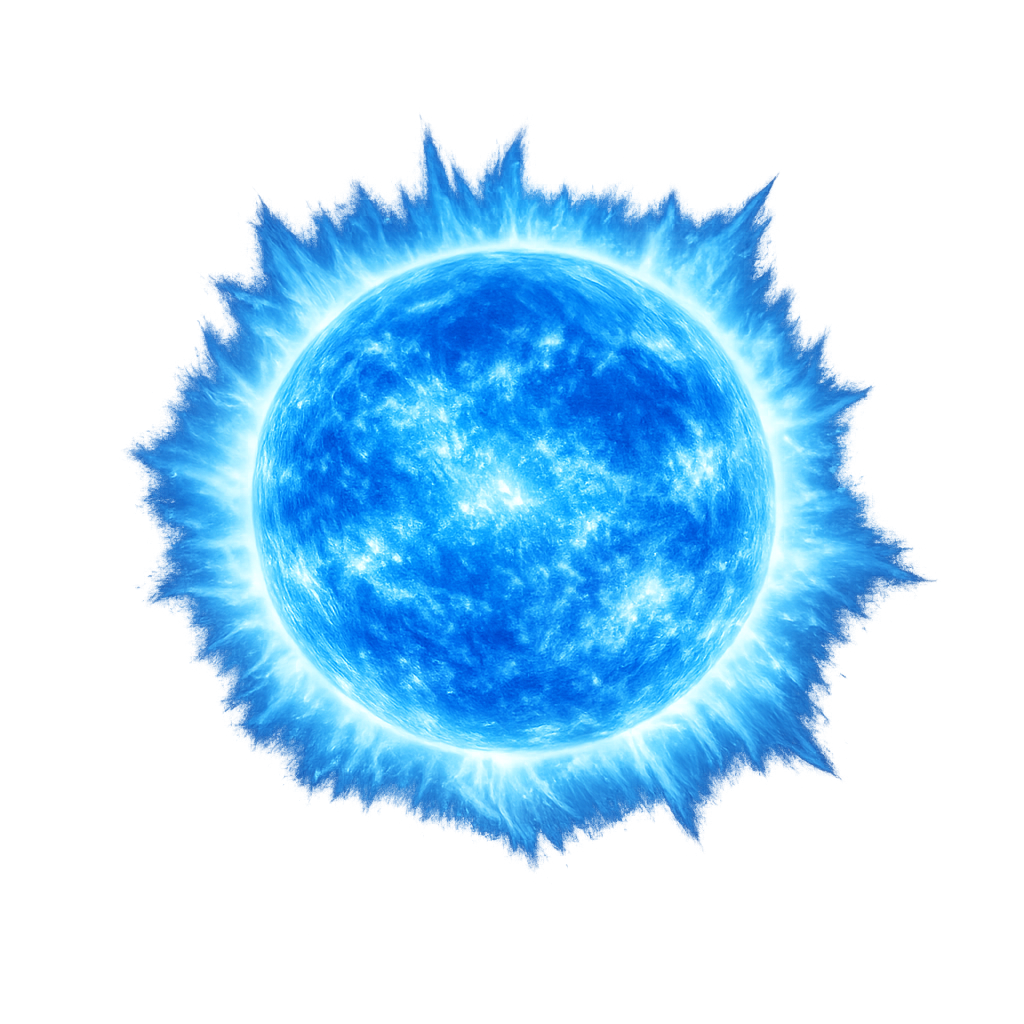
The Blue SunThe blue star at the heart of the Ghavaniska system. Only Ghavaniska itself and its native zilbrees remain unconquered by the Veskarium. The star's intense blue light illuminates the eight worlds that orbit it.
Vesk Prime
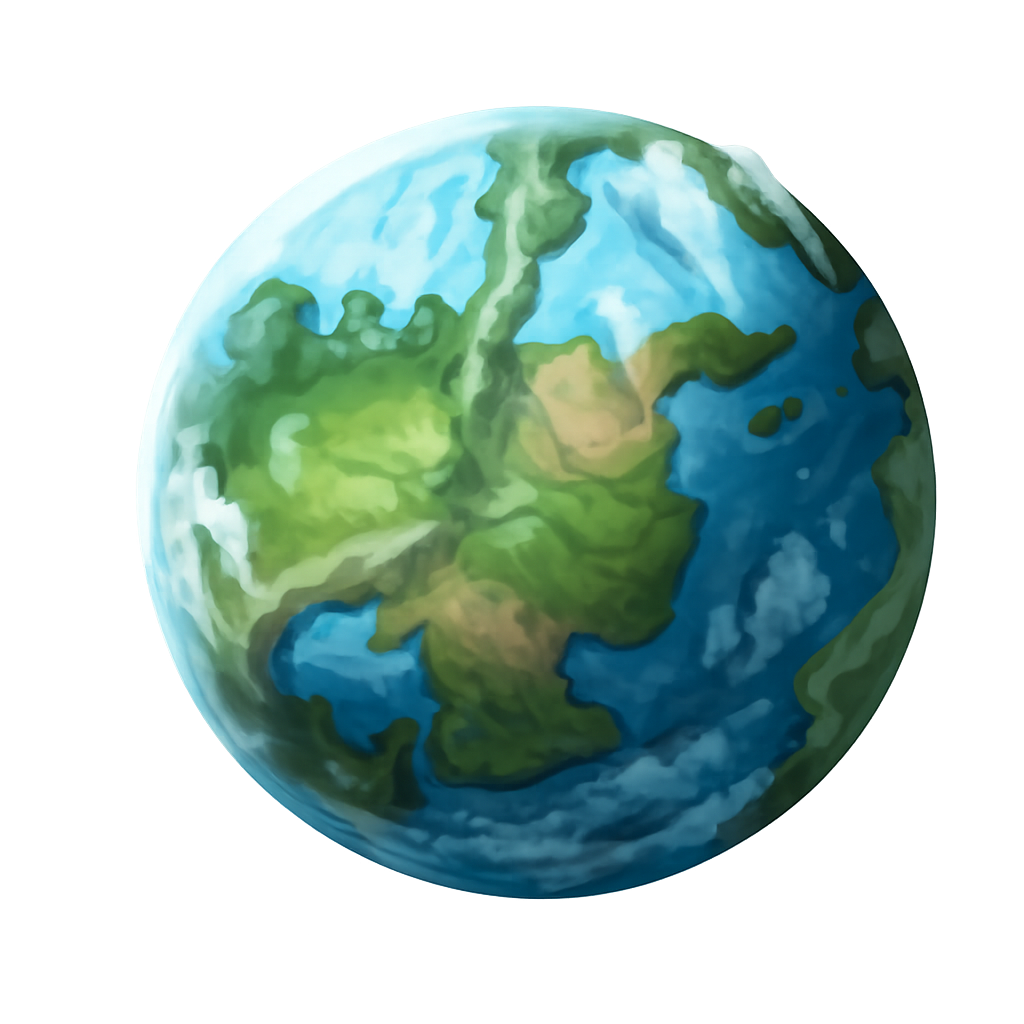
The Imperial CapitalVesk Prime is a hot, dry world with an abundance of land and rich natural resources. The closest planet to Ghavaniska, it is the vesk homeworld and the imperial capital of the Veskarium. Densely populated with large modern cities surrounded by huge tracts of cultivated lands, the planet also contains vast protected nature reserves where sporting vesk hunt dangerous beasts. The Veskarium began here long before the Gap, when the vesk defeated their rivals and brought the entire planet under vesk rule. Vesk Prime earned its designation when the Veskarium first expanded off-world and conquered the neighboring planet, renaming it Vesk-2. Before that, the homeworld had only one name: Vesk, the same name the vesk call themselves. The planet is a large terrestrial world with a single supercontinent broken by two connected saltwater oceans and smaller seas, tectonically active with volcanic belts along its faults, and small ice caps at both poles. Its landmass divides into four broad regions: the Central Veld, the Eastern Wastes, the Southern Coast, and the Northern Reach. Vesk civilization first arose on the arid equatorial plains of the Central Veld between the Otorozan and Nakahili Deserts, where the capital city of Command Prime still stands. Today, large numbers of non-vesk species live on Vesk Prime, with skittermanders filling bureaucratic positions and pahtras serving in the military. Since the end of the Swarm War, more Pact Worlds natives — especially humans, lashuntas, and ysoki — have settled on the planet. Ruled by High Despot Vindaskayo Swarmripper, the planet is divided into 99 administrative districts corresponding to ancient feudal landholdings. A dozen great Prime Houses still rule their ancestral lands, forming the closest thing the Veskarium has to a hereditary aristocracy. As the capital, Vesk Prime also hosts the Council of Despots, comprising the high despots of each of the Veskarium's worlds.
Vesk-2
IjiThe second planet orbiting Ghavaniska, Vesk-2 is a watery world with an interconnected shallow salty ocean covering much of its surface. Dry land mostly consists of gently rolling islands, none large enough to be called true continents. The planet's atmosphere is warm and tranquil. Vesk-2 has no axial tilt, so its climate bands proceed smoothly from equator to cold but iceless poles. The sapient natives, the squid-like ijtikris, originally called this homeworld Iji. They had only rudimentary technology when vesk conquered their world before the Gap, but much of Vesk-2 remains untamed. Strange ancient ruins predating ijtikri culture dot some islands, hinting at another sapient species that once inhabited the planet. Similar ruins on Vesk-5.3 suggest this species had an advanced civilization and that something cataclysmic caused their extinction. Water covers most of the surface, and the oceans are calm, shallow, and sun-warmed. With no moons there are no tides. Marshland is common, highlands are rare, and towering marsh grasses dominate equatorial and temperate regions. The planet has less tectonic activity than usual and lacks abundant minerals, making it less dense than normal. Weather near the equator is milder and less stormy than expected. Vesk-2 is divided into seven administrative regions: Jahkili, Kilti, Zwidij, Oolwi, Ijahi, Tirki, and the island of Command 2. Ijtikris and vesk live in remarkable harmony — most ijtikris consider vesk to have always ruled and are content in their vocations. Vesk-2 is a breadbasket for the Veskarium and a major source of salt, famous across the galaxy for its defrex ranches and as a popular vacation destination.
Vesk-3
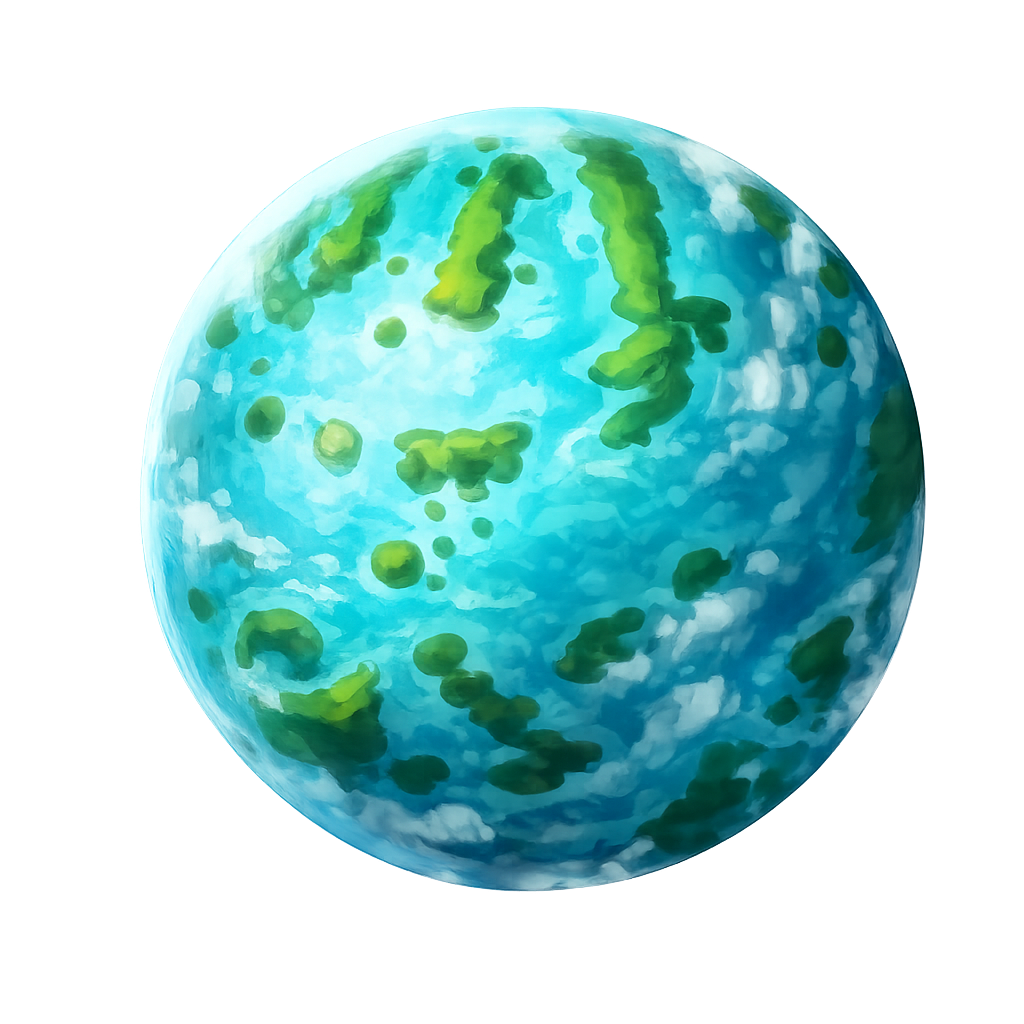
OeddertchonkFrom orbit, Vesk-3 looks like a sparkling jewel thanks to its expansive forests, shallow oceans, and the distinctive pink Vermilion Sea that cradled its earliest civilizations. Constant volcanic activity fills the land and sea with abundant nutrients, and warm oceans churn out dense rainclouds that shroud half the planet. Combined with almost no axial tilt, Vesk-3 is a garden world saturated in constant rainy spring and lush with plant life. Home to the ever-helpful skittermanders who still call their world Oeddertchonk, the planet's relative comfort came at great price — millions of years ago, a massive asteroid realigned the planet's axis. Skittermander myths tell of an ancient civilization called the Forerunners that perished in the catastrophe. Vesk-3 is a dense terrestrial world rich in heavy metals including gold, iridium, mercury, and uranium. Two primary continents define the surface: sprawling Aberanderen stretching almost pole to pole, and smaller Kavarit cracked in half by the Basin Sea. Aberanderen hosts the majority of the skittermander population and contains huge mega-farms feeding the Veskarium, while Kavarit houses the vesk-built planetary capital and mines. Beneath the surface lies Gadraveech, an extensive network of tunnels and caverns harboring a dangerous ecosystem including the feared stridermanders. Although Vesk-3 was the third planet conquered, it remains one of the most difficult to rule. Over half a billion vesk live here, mostly around Command 3, but skittermanders far outnumber them. The current ruler, High Despot Teret Cahan, is the only non-vesk (a pahtra) high despot in the empire. Skittermanders' cooperative instincts make them compliant vassals, but the Veskarium exploits this by suppressing their native language and imposing strict work quotas. If skittermanders ever collectively perceived their service as unfair, they could become a formidable insurgent population.
Vesk-4
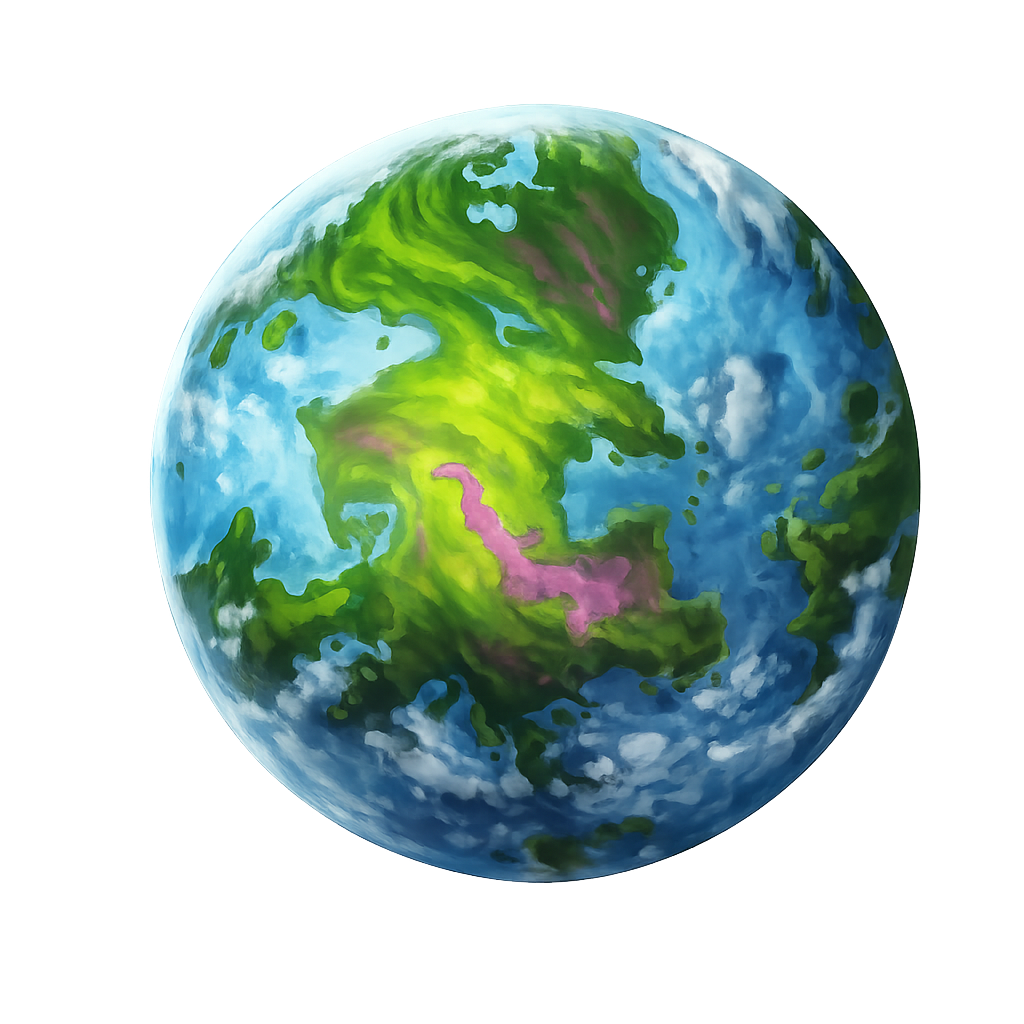
Talphiriax, the GluttonVesk-4 is the fourth planet from Ghavaniska and the third world to surrender to vesk conquest. Originally named Talphiriax by its native inhabitants, this world primarily consists of a single landmass that is a cradle of life teeming with lush jungles, swamplands, and volcanic mountain ranges. Far from idyllic, its inhabitants thrive in an environment that often proves deadly to nonnative species due to the planet's high gravity, natural radiation, and active volcanoes. Early vesk conquerors nicknamed this planet 'the Glutton' for its tendency to pull celestial bodies — asteroids, comets, and even its own moons — into its powerful gravitational field. Millennia ago, three of the planet's moons plummeted to its surface over just a few months, knocking its axis askew and triggering extreme tectonic activity that changed its topography and climate patterns forever. A massive range of volcanic mountains, the Vyskandi Range, now bisects Vesk-4's main landmass from northwest to southeast, containing two subterranean tunnel passes — the Upper and Lower Antreways — originally highways for the tunneling talphi. After integration into the Veskarium, the planet became an important hub for mining raw materials, as crashed meteors coupled with natural ore deposits yielded rich mineral resources. The planet's reputation changed dramatically when an enterprising vesk named Kamilzanva stumbled upon irradiated crystals in the Lodelands that could be refined to power solarian weapons. Now High Despot of Vesk-4, Kamilzanva established the Corona Academy near Ulkis Lake, specializing in training solarians from across the empire. Under her rule, all citizens engage in some form of labor and receive basic health care, shelter, and rations in exchange. The intelligent, mole-like talphi were the predominant species before the Veskarium subsumed the planet. Other native species include vryids (large crustaceans inhabiting the Dredgelands), shuzirians (ore-eating insects building vast mud hives in the Mudflats), and ausyrs (amphibious humanoids who survived cataclysms by hibernating beneath the swamps for decades). Due to hazardous terrain and pockets of natural radiation, much of the surface remains unsettled, with most of the vesk population concentrated in the overcrowded confines of Command 4 and Tribulation.
Conqueror's Forge
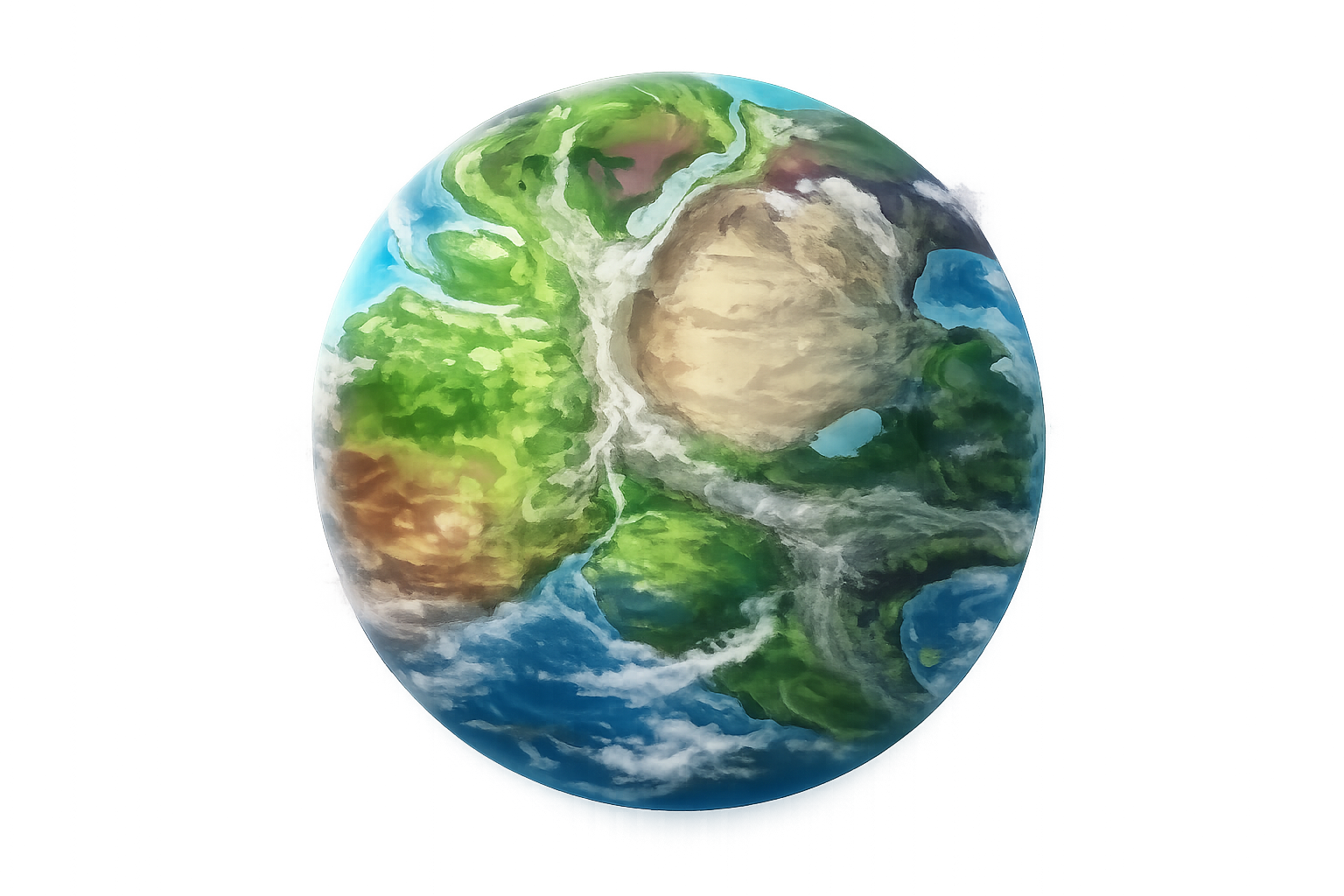
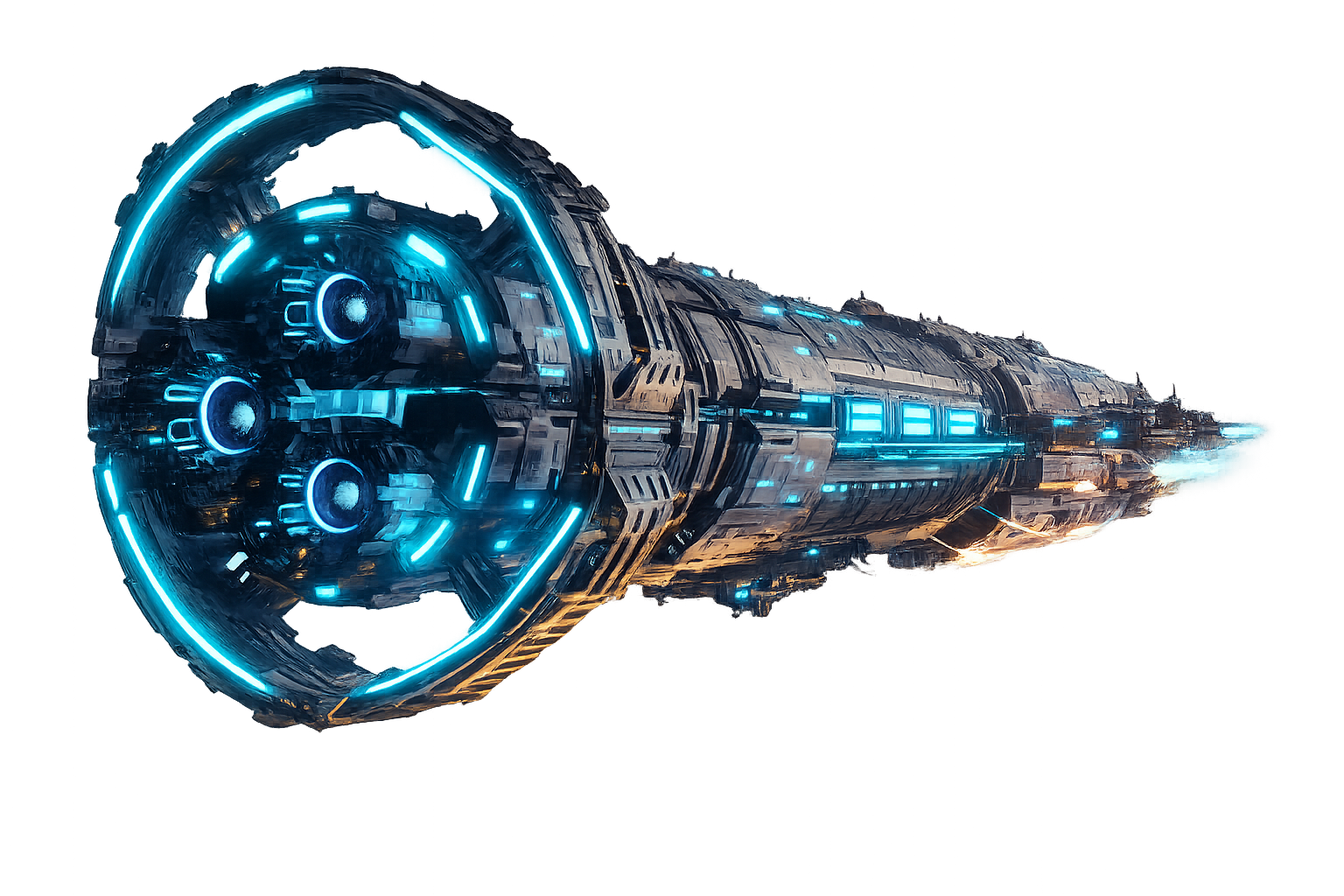
Mobile WarstationConqueror's Forge is a massive mobile space station and shipyard, one of the Veskarium's most important military installations and a full core world with its own high despot. Originally constructed in 47 AG and placed into orbit around Vesk Prime, the station was named in honor of Damoritosh, the vesk patron god of war and conquest. The Council of Despots ordered its construction to address a perceived technological gap after the Veskarium missed Triune's Signal that broadcast the secret of Drift travel. Thanks to developments from the Forge, the Veskarium's military technology reached previously unseen heights during the Silent War. A surprise Swarm attack destroyed the original station in 291 AG, but the Veskarium rebuilt it with powerful engines enabling it to travel throughout Veskarium space rather than remaining locked in orbit. Today, Conqueror's Forge travels the empire collecting resources for research and production and selling weapons and starships, never staying in one place too long to decrease the risk of another attack. The station is essentially a large cylinder approximately 2½ miles in length. Huge solar arrays and three long auxiliary modules extend from the forward end, giving it the distinct silhouette of a doshko when viewed from the correct angle. An inner core houses the command center, while an outer shell contains the shipyard and modular research sections. The station constantly rotates using centrifugal force to create pseudogravity equal to Vesk Prime's, as the delicate nature of its R&D work requires minimizing interfering forces. Population 82,000 (94% vesk, 4% skittermander, 2% other). High Despot Dantromal Kominar commands the station with a generally hands-off leadership style, allowing research teams to self-manage but coming down hard on any he sees as wasteful. The station's skittermanders have organized into club-like groups called Forge Crews with nicknames like the Gun Kids and the Star Chompers. The majority of threats come from within — dangerous experimental projects — but the station's formidable defenses include massive weapon emplacements, a defensive flotilla deployable in minutes, and the fact that nearly every vesk aboard is combat-trained and equipped with experimental weapons.
Vesk-5
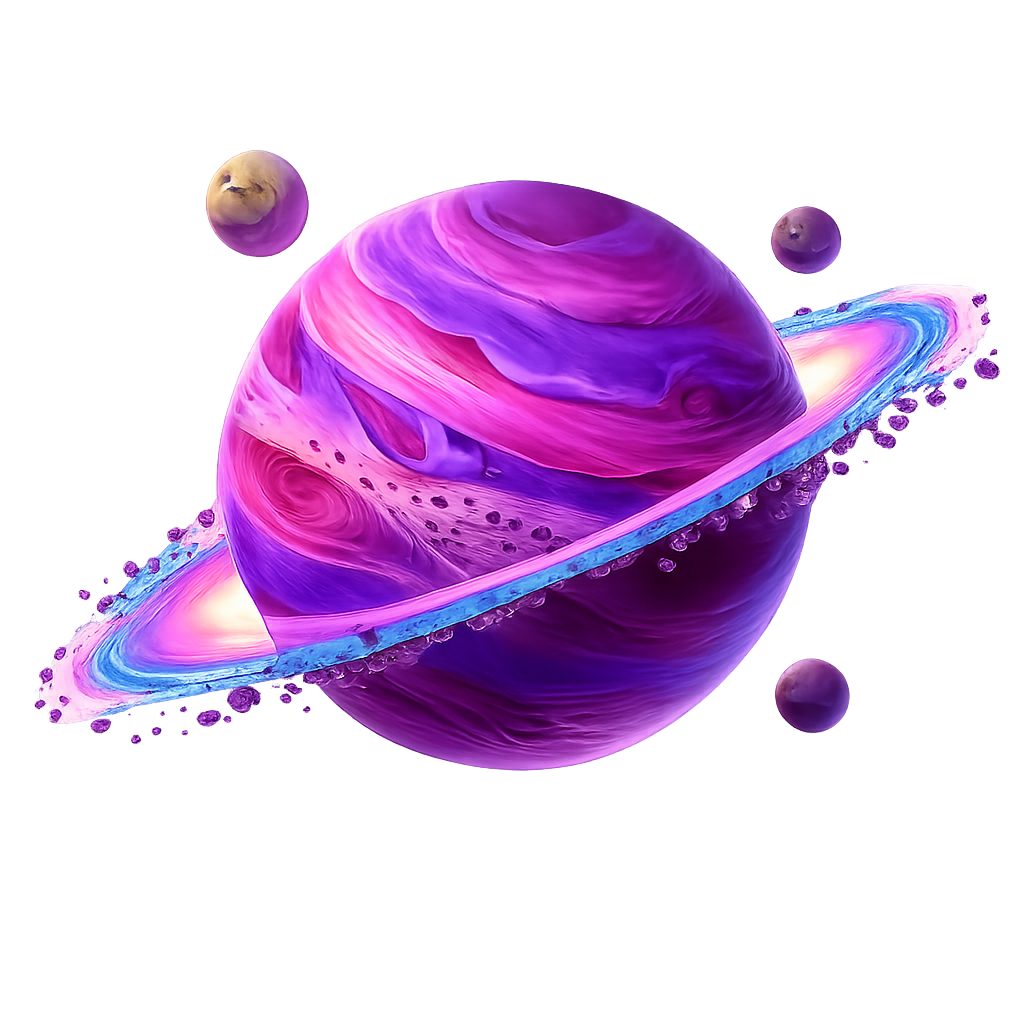
The Ringed WorldVesk-5 is a colossal ringed gas giant, the largest planet in the Ghavaniska system. Its churning atmosphere of hydrogen and helium is banded with vivid storms, the most famous being the Eternal Rage — a mega-storm larger than most terrestrial planets that has persisted for centuries. There is no solid surface; pressure and temperature increase rapidly with depth until gases become supercritical fluid and eventually a core of metallic hydrogen. The planet's powerful magnetosphere generates spectacular auroras at its poles, known locally as Ibra's Auroras for their seemingly divine beauty. Vesk-5's extensive ring system, composed of ice and rock debris, is home to the formian colony of Quariskt. Three major moons orbit the giant: Vesk-5.1, a frozen world hosting the main civilian spaceport; Vesk-5.2, whose gold-tinted crust shelters the stormrunner sanctuary of the Gathering and the mystic city of Mythnox; and Vesk-5.3, an ocean moon bearing mysterious ruins that echo those found on Vesk-2, hinting at an extinct precursor civilization. The Veskarium maintains Command 5, a diamond-hulled command station that floats in the upper atmosphere, as well as the Dekka Research Outpost deep in the cloud layers. The planet's brutal environment breeds a fierce outlaw culture of stormrunners — daredevil pilots who race through the gas giant's storm bands for glory and profit. Vesk-5 is also the site of the Lost Command, a destroyed Veskarium base whose wreckage drifts through the clouds, a grim monument to the planet's unforgiving nature.
Pulonis
Formerly Vesk-6Pulonis — formerly designated Vesk-6 by the Veskarium — is the sixth planet in the Ghavaniska system and the homeworld of the catlike pahtras. An inexplicably warm jungle world despite its distance from the sun Ghavaniska, the planet is hot and humid, with its low gravity producing towering trees, gigantic insects, and other titanic flora and fauna locked in ruthless competition. Pulonis threw off Veskarium control in 325 AG and became the first full member of the Pact Worlds government outside the Pact system that same year. A powerful magnetosphere helps the planet retain its atmosphere, but the magnetic winds it generates devastate many forms of technology — most starships, vehicles, and buildings are one system failure away from complete destruction. As a result, much of the surface remains untamed, and the planet's few modern settlements rely on heavy magnetic shielding to function. Residents must often travel hundreds of miles to visit a digitized library or advanced medical facility. Pulonis is a small, lush terrestrial world with a single supercontinent making up the majority of its land. The planet lacks ice caps, and its hot climate is nearly uniform across all latitudes. Its low gravity has allowed truly towering flora to evolve, with forests reaching as high as mountain ranges on other worlds, while the actual mountains are even taller with jagged peaks that seem impossibly steep to offworlders. Though technically having only one ocean, cartographers split the seas into three major bodies: the relatively safe Ketemare Ocean, the Tideflight Ocean and Tereltos Sea, known for dangerously extreme tides caused by the pull of the planet's twin moons — Hinirinn and Yolaku. Near the center of the continent lies a blasted rocky plain where the worst fighting of the Veskarium invasion took place; pahtras call this the Holy Lands, in honor of all who died fighting there. Recent investigation has unveiled that the planet's core appears to have been altered in its prehistoric past, allowing it to maintain warm temperatures despite its distance from the sun. Most theories posit that an unknown advanced alien species was responsible for this planetary engineering, but no proof of these aliens has been found anywhere in the Veskarium, and no ancient ruins have been discovered on Pulonis. Pahtras are lanky feline humanoids who evolved in the low gravity to be swift predators. They conquered their environment through adaptability, ferocity, and training rather than strength, thriving within a brutally competitive ecosystem. Pahtra culture reveres battle and music as the two most prestigious callings, often combining the two. Since gaining independence, the planet's pahtra nation-states have flourished with greater autonomy, though the lingering effects of Veskarium occupation and the ever-present dangers of the planet's magnetic fields and megafauna remain constant challenges. Pulonis is also home to hymothoas, sapient ichthyoid oozes that lurk in the most humid swamps. Despised by both vesk and pahtras, these bulbous creatures are known to crawl inside other sapient beings, slowly devouring their host's organs while adapting to replace their function.

Vesk-7
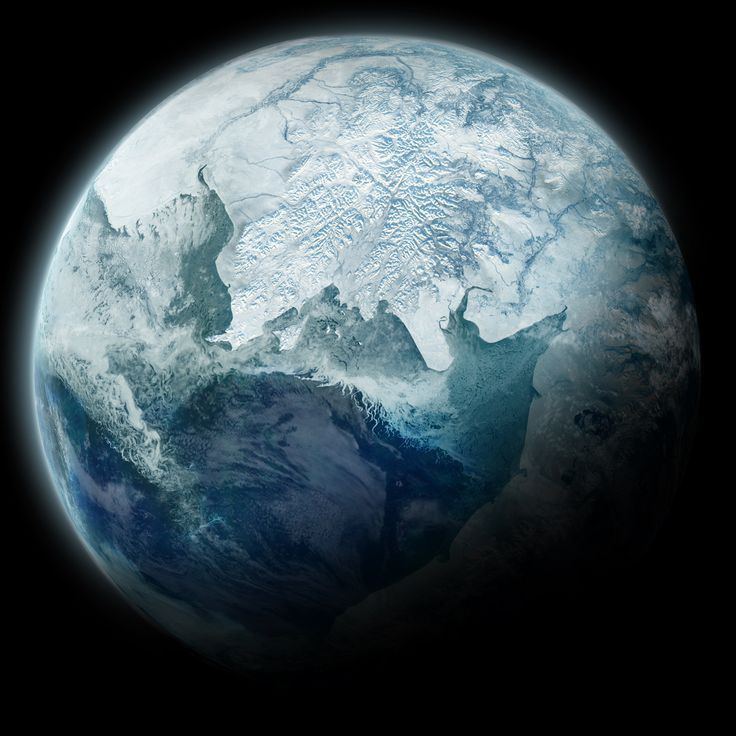
The Frozen TwinThe distant, icy world of Vesk-7 is one of the two outermost planets of the Ghavaniska system, home to the shaggy behemoths called kothamas. Kothamas refer to Vesk-7 as simply 'new home' in their native tongue. Vesk-7 and Vesk-8 share virtually the same orbit (making their planetary years equal), though Vesk-7's orbit is retrograde, taking it in the opposite direction from Vesk-8 and Ghavaniska's other planets. Twice each planetary year, the two planets converge, bringing them so close that their shared moon, Traverse, transfers its orbit from one planet to the other. Magical gates on both worlds and the moon activate only at these times, allowing kothamas to engage in the Meet — a deeply sacred journey between worlds. Vesk-7 has a hot molten core that keeps the planet from freezing entirely, allowing liquid water to exist in its equatorial region. Most of the northern and southern hemispheres are too cold for liquid water, with massive glaciers stretching from the poles to the tropics. A deep ocean called the Ice Sea forms a band around the equator, littered with vast ice floes and gigantic icebergs some as large as continents. Deep beneath the water, hydrothermal vents create small ecosystems of aquatic vegetation and deep-sea creatures. The Ice Sea encompasses three small equatorial continents: Asekora, Offinik, and Ulathaz. These planets are poor in minerals and other natural resources, so most vesk assign little value to them, and a posting here is usually a punishment for dishonored vesk or those exiled for controversial political views. The Veskarium's authority extends only a few kilometers around major settlements, leaving most resident kothamas free to do as they wish. While officially Veskarium citizens, kothamas' solitary and contemplative lifestyle leaves them with little need for centralized government. Their supernatural calming auras make enforcing discipline difficult, and both species tend to ignore each other unless interaction is absolutely necessary.
Vesk-8
The Thorned WorldVesk-8 is the outermost planet of the Ghavaniska system, sharing its orbit with Vesk-7 and home to the contemplative kothamas. Kothamas refer to Vesk-8 as simply 'home' in their native tongue, as the species originally evolved here before spreading to Vesk-7 via the shared moon Traverse. Vesk-8 is extremely mountainous and prone to volcanic eruptions, the result of gravitational tug of war between the planet, Vesk-7, and Traverse that heats its core. The planet has so many mountains that many joke its environment is so hostile it is covered in thorns pointing into space. It has the highest mountain peaks of any world in the Veskarium, most notably Mount Matha, which reaches toward the edge of the atmosphere. Shimmerstone, a translucent blue mineral with psychic calming properties, is found only in Vesk-8's frozen mountains. The only surface water exists at the bases of mountains, where liquid water bubbles up from volcanic depths to form sulfuric hot springs. Deep valleys between mountain ranges are frozen deserts devoid of nearly all life. Beneath the mountains, lava tubes and natural fissures form an underground network spanning the entire planet. Geothermal heat and meltwater create a thriving subterranean ecosystem of lush fungus forests filling large caverns with pulsing bioluminescence — believed to be among the largest and most diverse fungal colonies in the galaxy. Only one major entrance to the labyrinth exists on the surface, and reports of a civilization of large sentient plant creatures living in the tunnels remain unverified. The shimmerstone miners at Penal Colony 8 are growing restless, with talk of throwing off Veskarium rule and selling the shimmerstone themselves. High Despot Jularaz the Frozen often has 'important business' on other worlds, leaving most governance to subordinates.