Near Space
Near Space is the vast region of space surrounding the Pact Worlds system, encompassing countless star systems within a few dozen light-years. While not as densely connected as the Pact Worlds themselves, these worlds are close enough to maintain regular trade and diplomatic contact. From the prison planet of Daegox 4 to the shattered floating continents of Orry, Near Space is home to a staggering diversity of civilizations, species, and mysteries — each world with its own cultures, conflicts, and secrets waiting to be uncovered.
WORLDS INDEX (20)
Daegox 4
Inescapable Corporate Prison
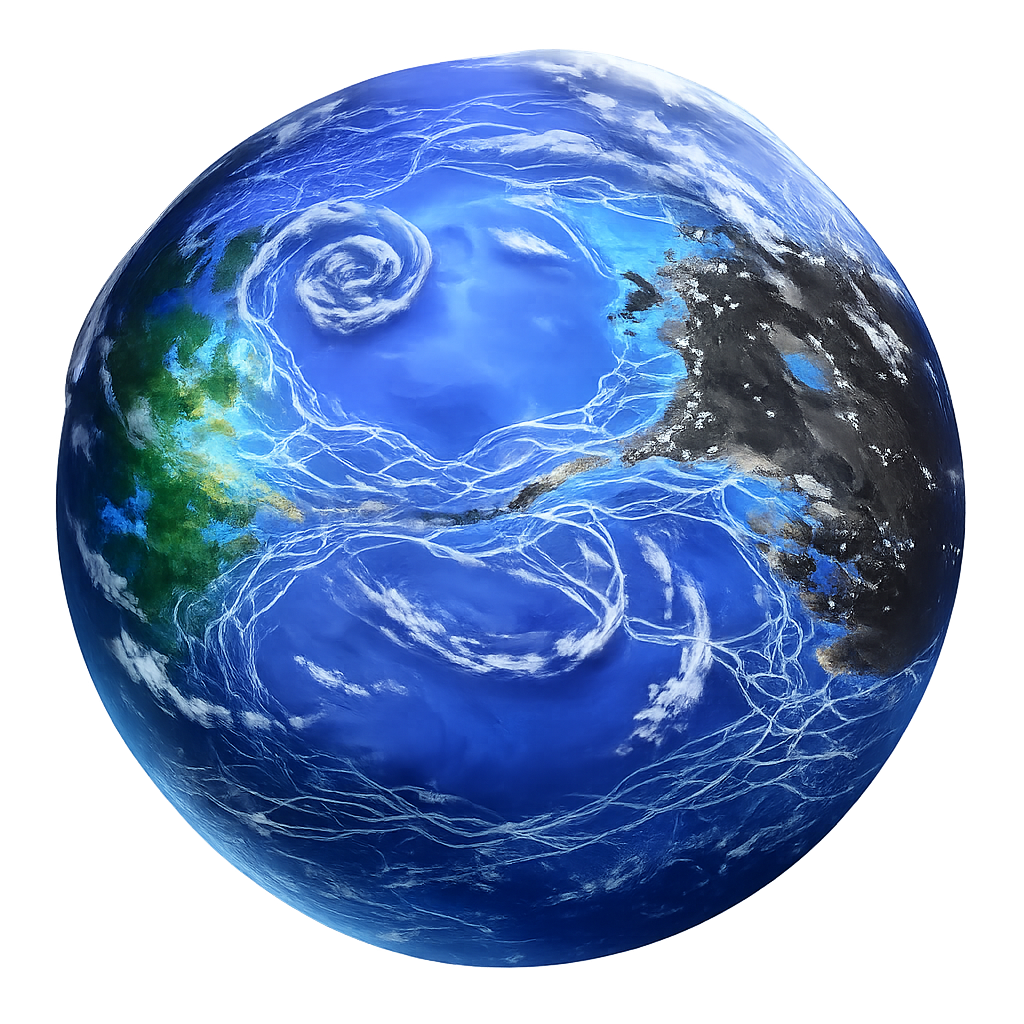
An insular world in a small system, Daegox 4 is a planetary-scale prison. Aside from its wardens, all inhabitants here are prisoners. Two hundred years ago, Daegox 4 was a wild planet, inhabited only by native flora and fauna, such as towering kaezar trees, grasslands of waving tchothein, herds of docile rimbets, predatory felrots, giant buzzing skivvlers, and the soshsurus fungal network that forms a global mesh in the planet's oceans. Then the Daegox Corporation discovered the untamed world and claimed it, quickly building prison structures on the planet's lush surface. The corporation's members are all mysterious beings who call themselves 'wardens'—humanoids with crimson skin, black eyes, nearly transparent hair, and six-fingered hands. The corporation accepts prisoners from any government or entity it judges as legitimate, for a fee. One of the planet's most remarkable features is its atmosphere: the outer layer is a thin, one-way membrane that physical objects can enter but cannot leave, and teleportation magic within it is unreliable. The atmosphere also contains spores of the world-spanning soshsurus network, which make most sapient creatures docile and uneager to commit violence—though the wardens are immune. Daegox 4 has two large continents: Control, completely covered with a sprawl of squat buildings housing millions of prisoners, and Bounty, a mostly untouched wilderness where prisoners are allowed to roam freely. While some prisoners have appointed sentences, most are lifers. The Daegox Corporation prides itself on its claim of having never allowed a successful escape, though underground groups speak of a figure known as the Wren who is said to have escaped single-handedly.
Daimalko
Ruins and Rampaging Colossi
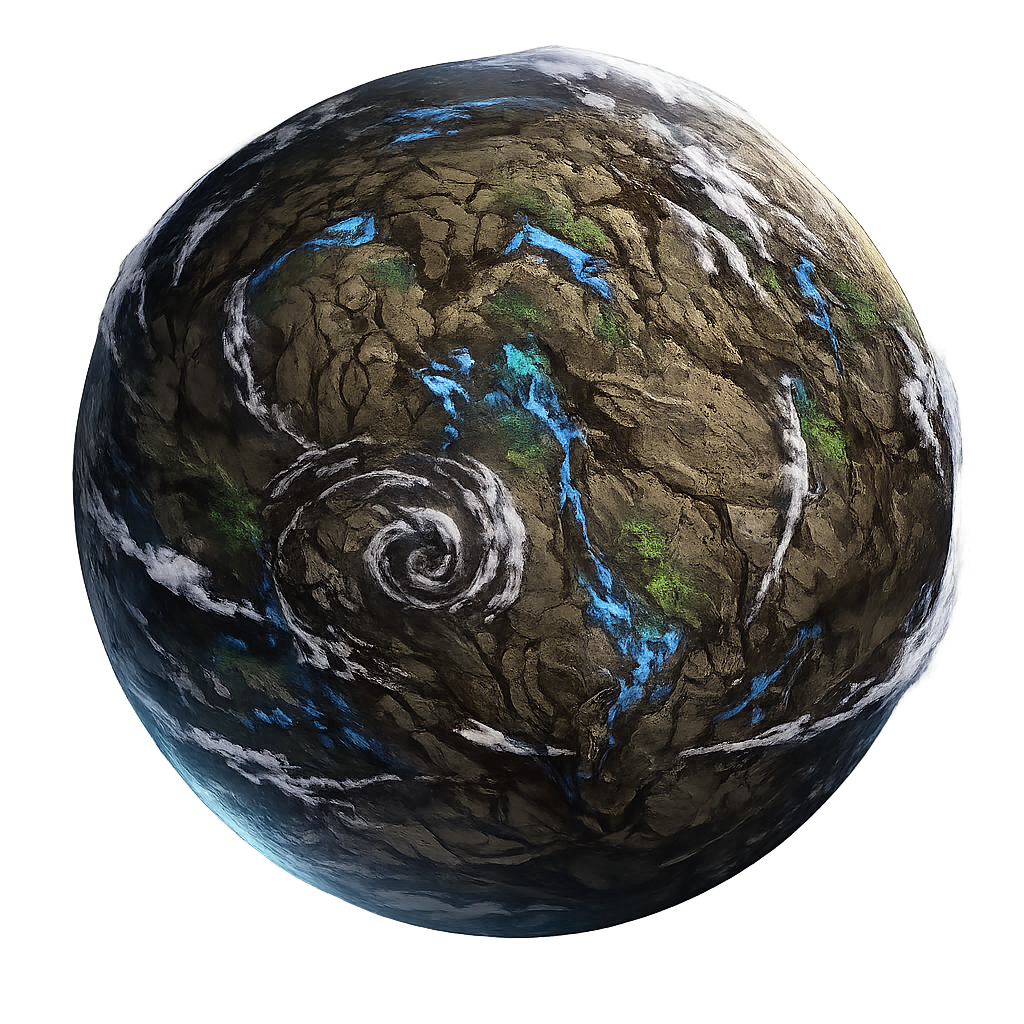
A single planet orbiting a tiny star, Daimalko was not always a dry, blasted world teeming with rampaging colossi and struggling survivors. Lush greenery once covered this world, sustaining two advanced civilizations: the psychic Confederation of Volkaria and the Holy Queendom of Ykarth, a state that claimed a divine mandate from the empyreal lord Duellona, the Warrior Maiden. Then, 200 years ago, in the course of a month, the planet's major oceans evaporated, its greenery withered, and earthquakes reverberated across the planet. From the rocky terrain of the empty seas rose nightmarish colossi—monstrosities covered in armored plates and bearing rows of tongues, teeth, and worse. The planet's population, consisting primarily of gray-skinned damais, dropped from many millions to just a few thousand. The shell-shocked survivors fled underground to subterranean enclaves collectively called the Refuge. After more than a century of subterranean survival, a brave group of leaders stumbled upon rune-scribed orbs that allowed them to empathically sense and steer the roving colossi aboveground. These leaders became the first Guardians, and they used the orbs to safely usher colonies back to the surface. Today, Daimalko is still a blasted ruin—its cliffs and valleys are largely desiccated seabeds, its forests long dead, leaving skeleton-like fields of petrified trunks. Yet a few salty seas and large freshwater lakes support tenacious lifeforms such as poisonous lichens, carnivorous vines, enormous mountain eagles, two-headed griffons, six-legged goats, and hairless yetis capable of psychic blasts. For the first time in generations, notable populations of humanoids have returned to the surface, primarily under the watchful eyes of the Guardians.
Embroi
The Iron Thrall of Hell
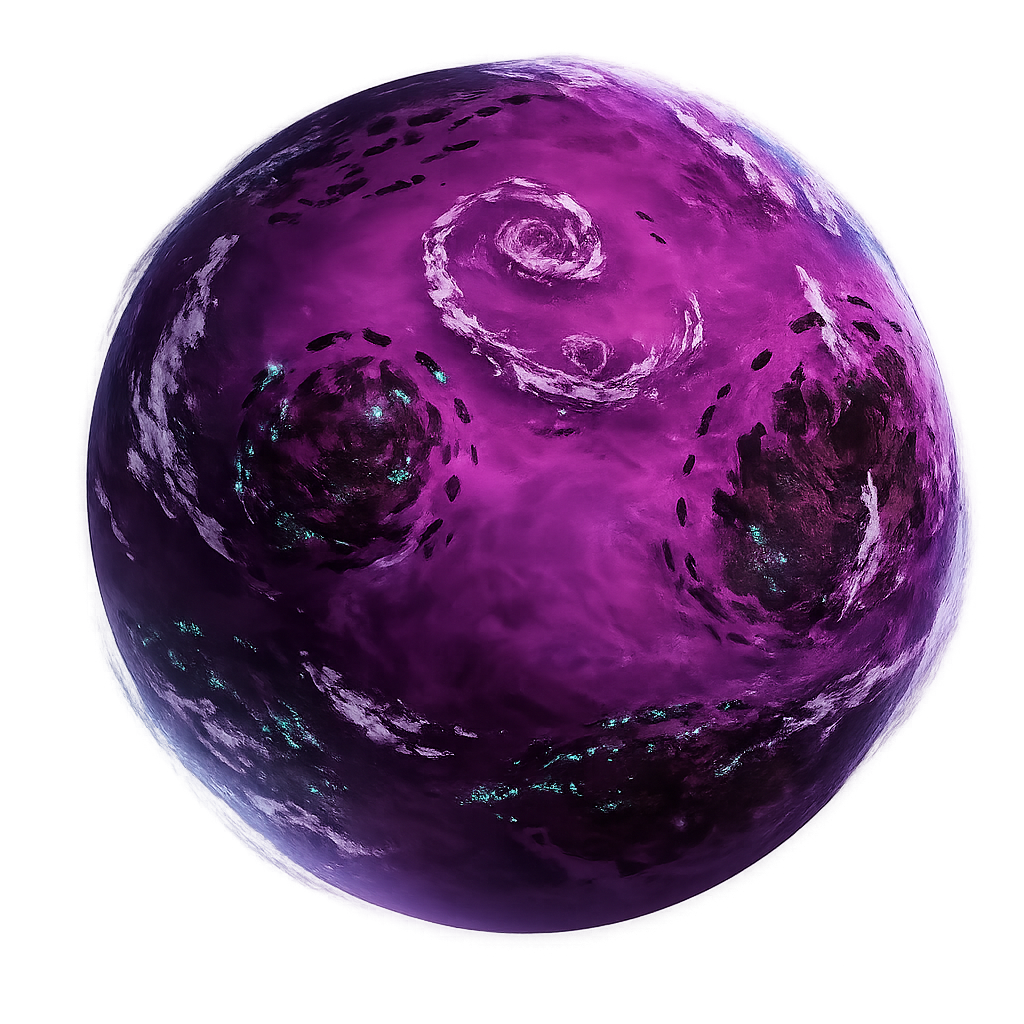
A moonless world of amethyst-colored seas and purple stone, Embroi glitters alone in the void. Like the sapient mollusks who dominate the planet, however, Embroi wears a mask: peaceful beaches and gentle violet hills hide underground slave-pits and diabolical factories operated by agents from Hell. The intelligent races native to Embroi all evolved from mollusks. Embri arose from aquatic progenitors and, in prehistoric days, crawled from the seas on clawed limbs and fought the gentle snail-like yeddins, who had already developed advanced metalworking and empathy-based social systems. The embri conquered the land and adopted yeddin technology; over time they also learned emotional restraint, concealing their feelings behind metal masks. Six large continents cover Embroi. Demagallo and Irralo Kellad are central to administration and industry, Antikawara is home to luxury magma-heated mineral baths, Chapru Von is mountainous and choked in massive garbage fields, Kanfrei contains prisons and slave-pits, and the Baskar Expanse is a bombarded wasteland used as a testing range. Beneath each continent sprawl vast infernal passage networks occupied by devils who shape embri society and labor for inscrutable ends. As a result of generations of diabolic influence and social conditioning, Embroi is joyless, toil-centered, and hostile to independent thought. The malebranche devil Occhiorasoi rules the hidden infernal order and is among the most powerful beings on the planet.
Gaskar III
Aquatic World of Exiles
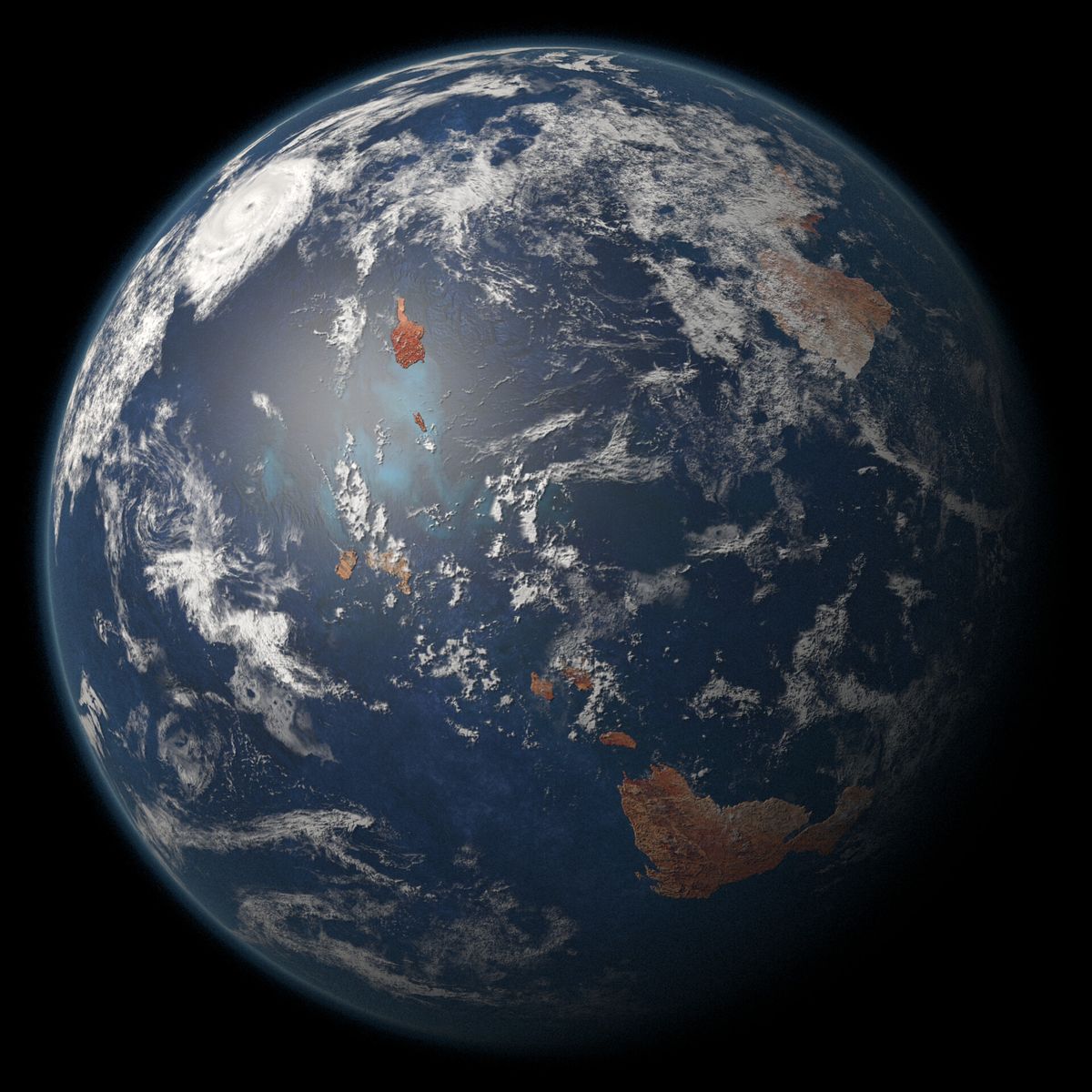
A watery world third from its star, Gaskar III consists of the crescent-shaped continent Lavnovya and an irregular ring of islands, all surrounded by the massive, storm-wracked Yulalov Ocean. Anciently, a collision with a planetoid reversed the world's rotation and knocked off ejecta that formed one of its moons. Later, a millennia-long ice age depressed much of Lavnovya's crust; as the climate warmed, the continent began slowly rising from the sea. The planet's warm climate, slow rotation, and vast ocean create enormous cloud systems and violent cyclones that batter the eastern mountains, while the western lowlands are marginally calmer and host most surface settlements. Native life is storm-hardened and abundant—kelp, ferns, arthropods, fish, amphibians, and reptiles, including giant peschkery cave centipedes and leaping ryugars. The first major humanoid settlers were vesk renunciants, self-exiles from the Veskarium who followed the teachings of the prophet Gaskar Yulalov and his visions from Weydan, god of equality. After Yulalov's execution, his followers endured generations of suppression before escaping aboard the colony ship Gaskari once Drift travel became possible. They settled this uninhabited system and built a society centered on freedom, mutual duty, and exile-forged communal survival. Though Veskarium authorities generally ignore the colony, they occasionally send contractors to retrieve fugitives, and Gaskari tolerates these incursions to preserve uneasy peace.
Ghorus Prime
The Inheritance
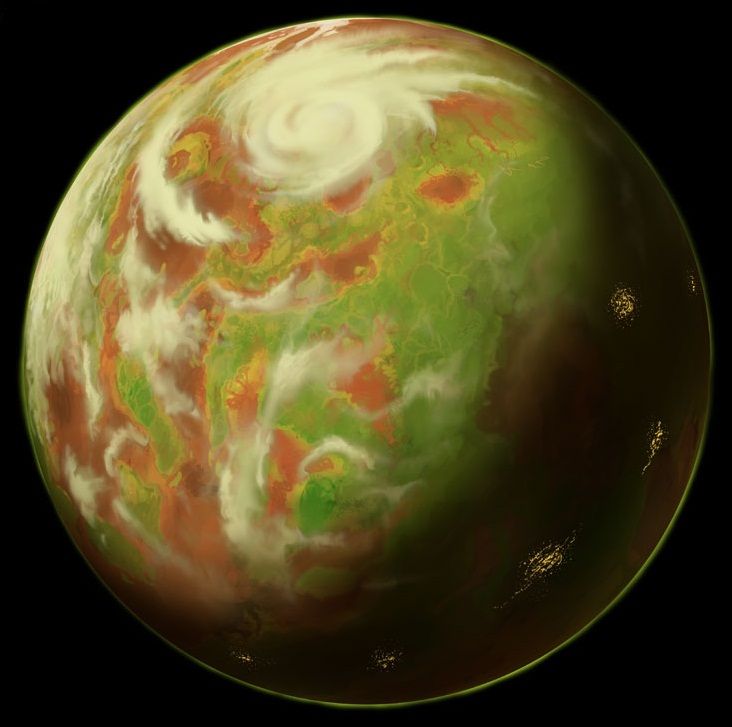
Though it once appeared to be a barren rocky husk, Ghorus Prime was never truly dead: island-sized formations on its surface were dormant kinwoods, colossal deciduous trees with latent consciousness. The planet awakened when ghorans from lost Golarion discovered it and used a blend of science and mysterious magic to coax the kinwoods into springtime, triggering the release of starship-sized seeds that spread forests across most of the world. Over time, ghorans came to view Ghorus Prime not only as a homeland but as a possible progenitor species-world, given the deep biological parallels between kinwoods and ghorans. Today, forests cover most of the planet, broken by mountainous kinwoods whose crowns glitter with integrated biotech settlements. A vast non-terraformed region called the Fallows occupies roughly a quarter of the western hemisphere. Though surface water is scarce, kinwoods draw on a deep aquifer of unknown origin and regulate climate through a planetary root-and-cloud system, keeping conditions broadly terrestrial. Ghorans are the majority population and often cautious around outsiders, shaped in part by historical predation by humans and a long memory of exploitation.
Gideron Authority
Expansionist Hobgoblin Regime
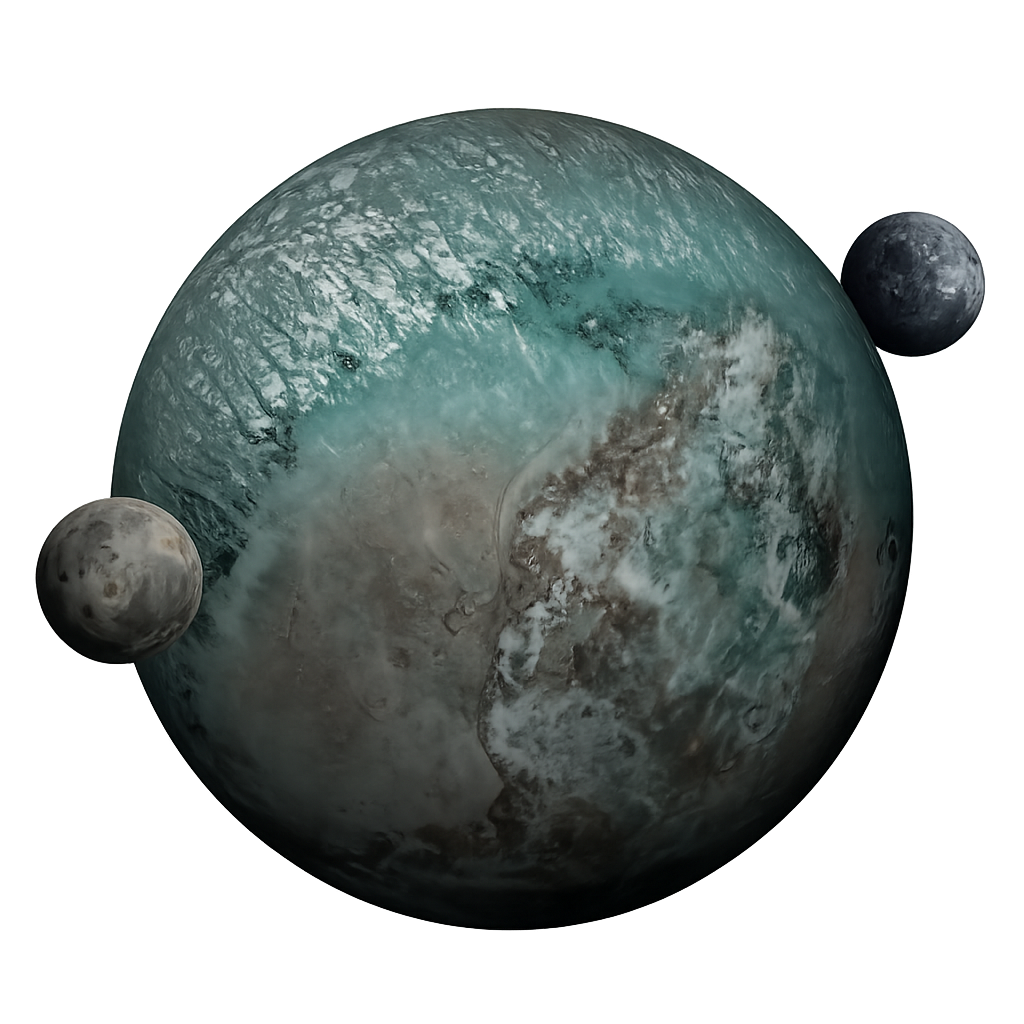
Of the Gideron system's six planets, only Gideron Prime is conventionally habitable. Its climate is harsh and varied—polar icecaps, broad temperate zones, and a hot equatorial belt of immense jungles where life trends toward poisonous defenses, slow metabolisms, and giant forms. The planet has no known native sapient culture; its current populations are largely descendants of offworld colonists, with hobgoblins and their kin in the majority. After the Gap, immigration accelerated growth and urbanization, but a recent military coup replaced elected governance with the expansionist Gideron Authority, justified publicly as a defensive necessity against Marixah privateers. Since then, the regime has tightened immigration and ideological control, normalized xenophobic narratives, and pushed rapid territorial expansion beyond its home system. The Marixah Republic remains its principal rival, both as a military competitor and as an ideological threat due to its pluralistic social order. The Authority also claims ancestral rights to pre-Gap hobgoblin ruins in Marixah space, and cross-border deniable operations continue to escalate.
Helfen-Thel
World of Arches and Gates
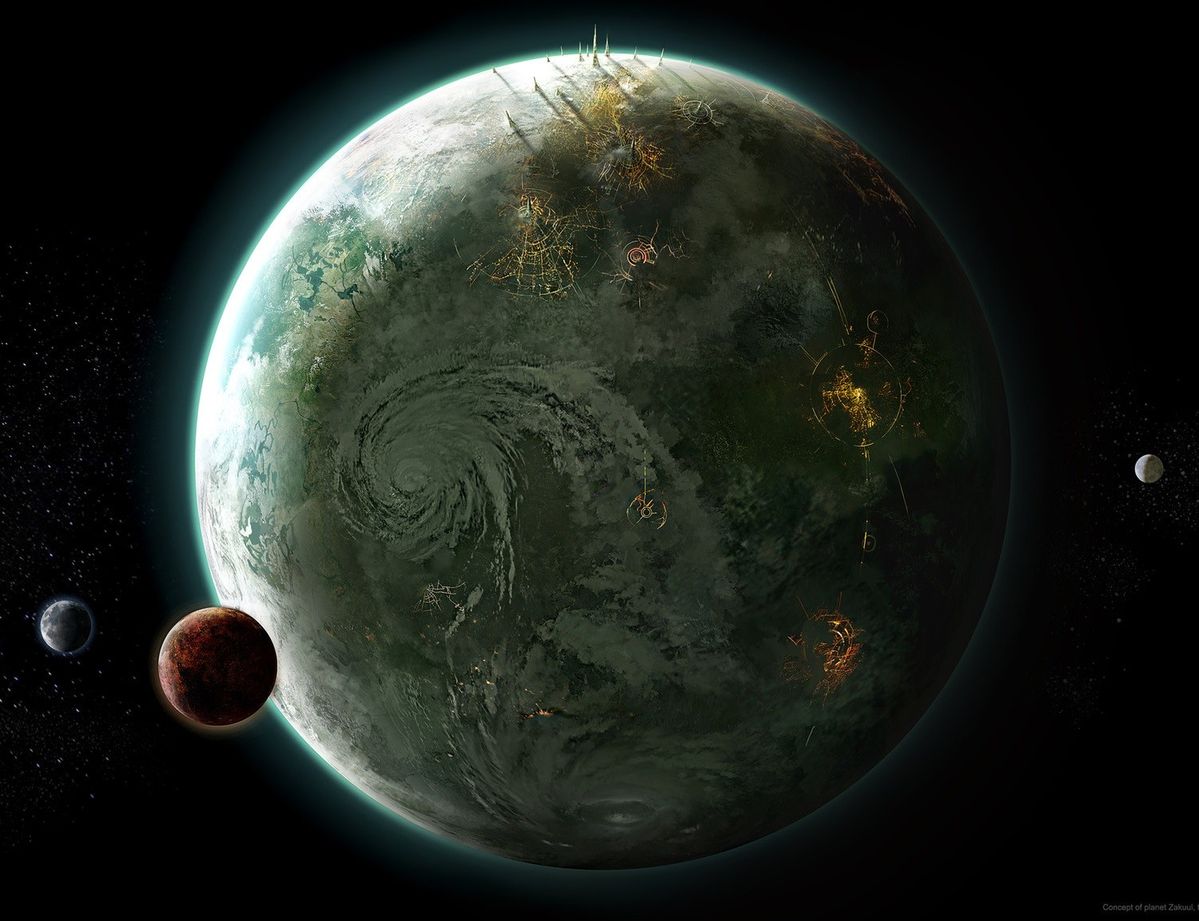
The Helfen-Thel system contains nine worlds orbiting the orange-red sun Ombrut. Its predominant people are the maggedli: stony-skinned humanoids about 3 feet tall whose civilization is built on magic rather than advanced technology. Though maggedli never developed true spaceflight beyond rudimentary enchanted rockets, they settled all nine worlds through an immense teleportation infrastructure of far-step arches. On Helfen, their home world, natural geological arches aligned to ley lines enabled stable long-range gates early on; on other worlds, explorers initially traveled one-way and spent generations growing suitable stone arches to complete two-way transit. Today, thousands of far-step arches knit the system together so tightly that routine daily travel can span multiple planets. During expansion, maggedli encountered halaths on the ice world Thel: friendly, ram-headed quadrupeds and master ice-shapers who preserved their warming world through advanced cryomagic and geologic control. Halaths are unaffected by teleportation and cannot use far-step arches, so while politically influential in the Ninefold Council, they remain physically constrained by Thel's ecology and infrastructure. Recently, troubling gate anomalies have emerged: travelers appearing aged by weeks or months, others returning bloodless and dead, and some vanishing entirely. The Ninefold Council is suppressing details to prevent panic across this arch-dependent civilization.
Landahl
Peaceful World Resisting Conquest
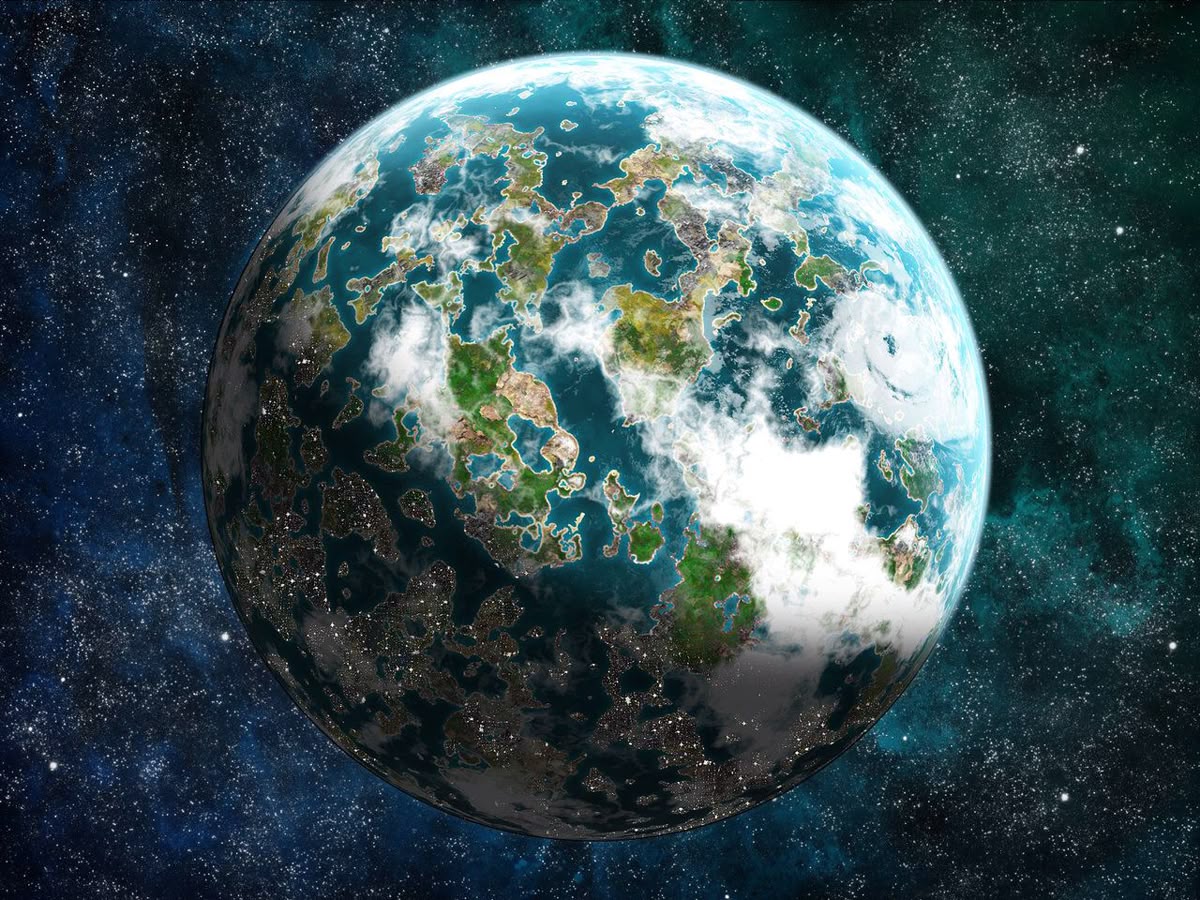
Lush and resource-rich, Landahl is a world of rainforests, shallow life-filled oceans, and three major continents: mountainous Assica, comparatively dry Pothyria, and jungle-choked Tabisaan. It is the home of the illyrs, bioluminescent quadrupeds who developed a peaceful global culture before achieving spaceflight in recent decades. Their first external contact brought conquest instead of diplomacy: Veskarium forces rapidly overran Landahl, only to face an escalating insurgency as illyr resistance cells formed worldwide. The orbital destruction of Hizzala—remembered as Tradger's Reckoning—was intended to crush dissent but instead galvanized long-term rebellion. For more than two decades, guerrilla war has defined the planet. After earlier commanders failed, Commander Koben Adalandil shifted to a slower strategy of targeted pressure, selective reconstruction, information warfare, and deniable operations, including mercenary espionage and false-flag manipulation. Even as Veskarium leadership scales back support, conflict persists as illyrs adapt, recruit offworld help, and contest both military occupation and propaganda control across the planet.
Marixah Republic
Jewel of Unity
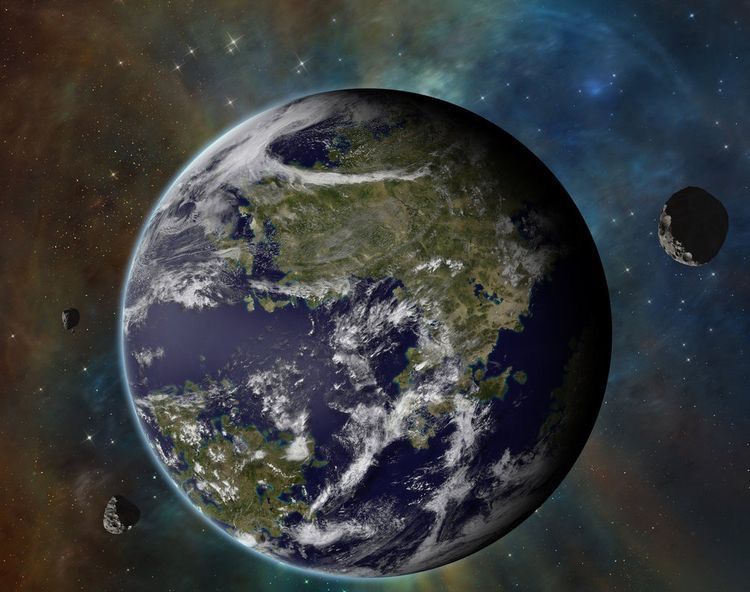
Pact Worlds colonists dispersed far and wide before and during the Gap, settling on planets such as the Golarion-like Marixah. After the Gap, Marixah's inhabitants realized their isolation and united with neighbors on the planet Kizmatta to form the Marixah Republic. The core system contains only two habitable planets, two lifeless rocky worlds, and three gas giants, but prosperity and equitable laws attracted widespread immigration, enabling expansion to eight additional colonized worlds beyond the home system. Second from its star, Marixah is a temperate world with six continents and productive seas, though endemic insects have evolved rapidly and now threaten both agriculture and citizens. Kizmatta, farthest from the sun, is a frigid world of caves carved by geothermal activity; terraforming has increased surface temperatures enough to enable broader habitation. The Republic holds elections every 6 years, filling a 257-member legislative body that meets in the capital, Rajadhan. Political parties form coalitions to navigate the diverse viewpoints, and chief representatives are appointed to handle diplomacy and emergencies. The Republic sees itself as an equal to the Pact Worlds and Veskarium, though it commands far less military and political might. Tensions with the Gideron Authority have escalated into border skirmishes over the Acalata system and Sansorgis, where ruins suggest a vast ancient hobgoblin empire once spanned both regions. Legislative gridlock between hawks and doves has paralyzed formal strategic responses, though the drift toward open conflict continues.
Nemenar
The Prismatic Shadow
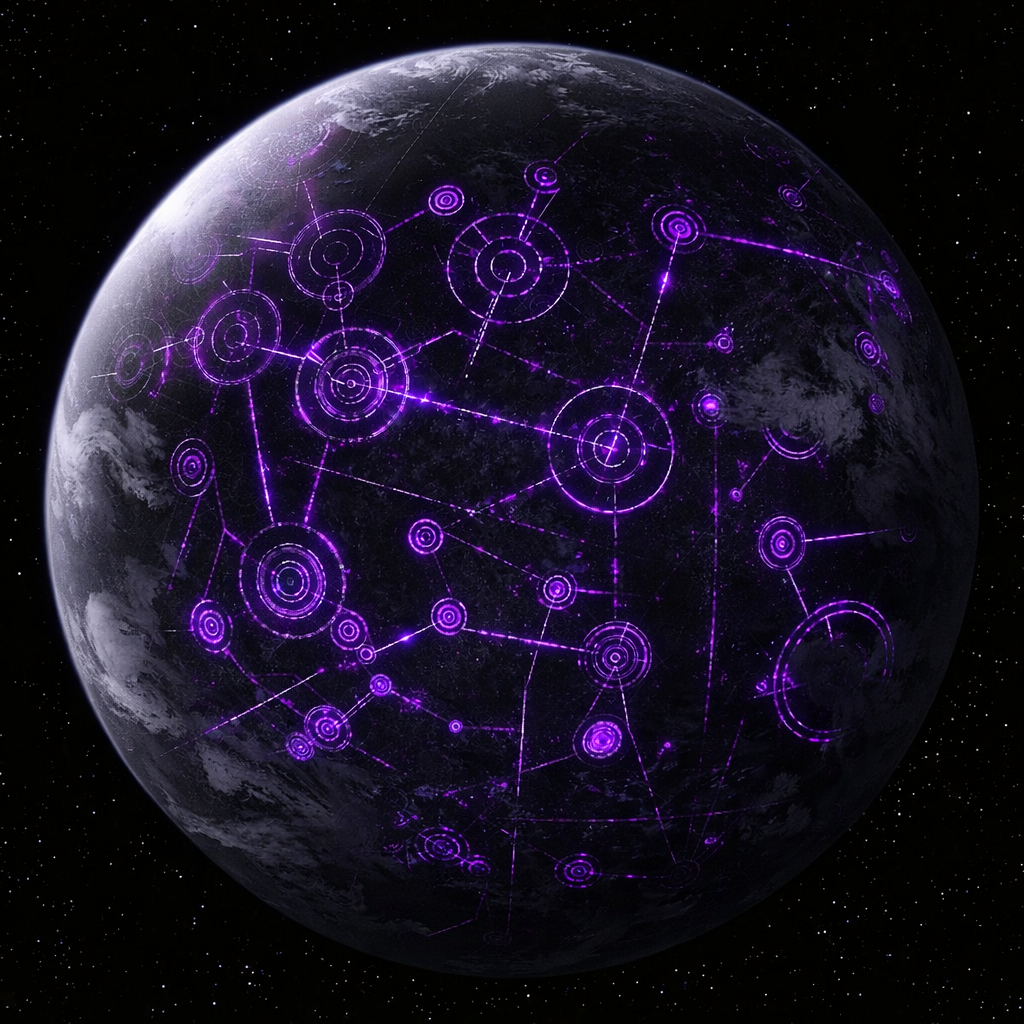
Nemenar is an enigmatic planetoid orbiting a brown-dwarf star, entirely encapsulated by a massive black-light filter constructed millennia ago. This filter allows only ultraviolet light through, shrouding the planet in shadow for those without blindsight or special equipment. The sole sapient species, nemenaris, are a cursed people. Long before the Gap, they were a scientifically advanced spacefaring race. During exploration, they discovered an asteroid with a small shrine containing a 4-foot statue of an unknown deity and an amethyst offering bowl. One scientist left an offering—an empty vial—and the crew returned home to find their entire planet ablaze in violet mystical fire. Though no one died, all organic matter suffered perpetual agony when exposed to visible light from their sun. Scientists discovered Nemenar had been eternally cursed: any surface-originating material exposed to visible sunlight bursts into unrelenting flame. Refusing to abandon their world, nemenaris constructed a barrier blocking all visible wavelengths. Over millennia, flora, fauna, and nemenaris adapted to ultraviolet light, developing vision attuned to it. Today, most nemenaris live underground in prosperous, scientifically advanced settlements. Their government is enigmatic: they elect a cosmocrat, a powerful magic user who spends their life communing with the curse deity, now known as Nylessa, and guiding the people away from further catastrophe in exchange for gifts of discovery and prosperity. Despite its unusual circumstances, Nemenar is a bustling tourist hub. Nemenaris have built thousands of crystalline prismatic spires that project visible light, and surface settlements painted in phosphorescent colors accommodate visitors. The planet features diverse cooler biomes: taigas, cool sand deserts, tundra, nitrogen oceans, and towering ice-capped mountains.
Orry
Blasted Cluster of Floating Islands
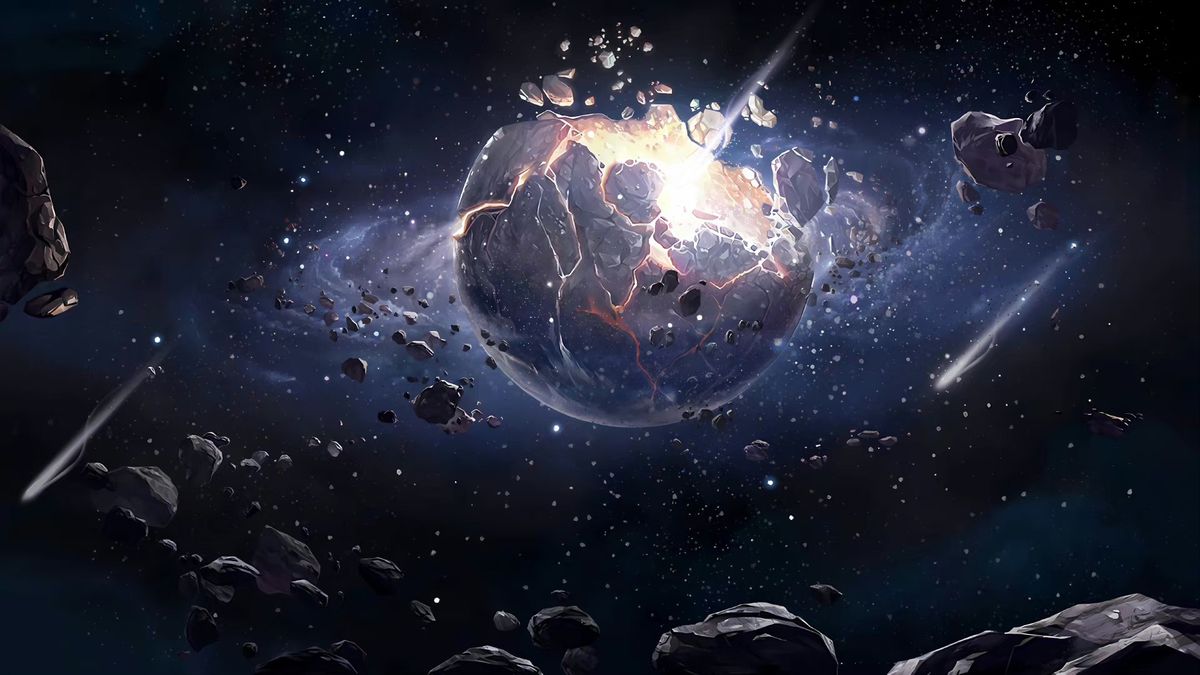
A world that suffered a tragic anomaly that cracked its geological core. The survivors now live on 10 country-sized swaths of land and several smaller islands that magically float and orbit the central gravity anomaly without colliding.
Pabaq
University Planet
Pabaq drifts slowly around its bright-yellow sun in an annual cycle nearly twice as long as Absalom Station's. The planet's land surface is covered in greenery, from muggy rain forests and treacherous marshlands to tropical coastlines where 300-foot-tall trees stretch skyward. Six major continents feature distinct biomes: Zhast, with large populations of saltwater gengen osharu; the largely unexplored desert of Demwiq; the sparsely populated ice caps Nalfant and Avar dotted with remote research compounds; Rawara, with rolling plains, taigas, and the towering Rivali Peaks; and Jenikar, a landlocked verdant continent of rain forests and swamps that is the most populous and home to capital city Jhavom. The planet's sole sapient species, sluglike osharus, are notoriously cautious due to their weak physical constitution. Despite pervasive timidity, they are adamant in their shared objective to gather as much knowledge as possible, conquering fears to tame unforgiving wilds and establish thousands of university-like settlements. Major cities are protected by armies of mobile AI-controlled drones programmed with pacifistic defenses that tranquilize dangerous beasts and transport them far away, while air-defense systems guard against airborne attacks. Most osharu settlements are near aquatic areas—on freshwater riverbanks and lakes, with ocean-dwelling gengens favoring saltwater coasts. Wilderness outside protected cities is harsh: long unforgiving seasons, frequent storms, and dangerous fauna like the jungle-stalking ganatra, vicious mammalian predators whose camouflage makes them nearly invisible. In Jhavom's center stands the Hall of Records, a 180-story skyscraper housing all information collected by osharus. Near its top, the Grand Council—six elected osharus permanently wired into complex computer networks—exist in virtual-reality comas, processing unimaginable data influxes that many believe are blessings from Yaraesa.
Pakahano
Hub of Illusion-Fueled Tourism
Pakahano is a volcanically active world featuring the fertile Tarpak megaocean with hundreds of tropical islands, a large continental landmass called the Lavalands, and two small moons. Its primary inhabitants are two plantlike peoples: menei, peaceful floral illusionists living on the Lavalands' stable coasts and larger Tarpak islands; and tammans, tempestuous treelike folk roaming the Tarpak in advanced seafaring fleets, exploring and colonizing according to capricious whims. The world is best known as the source of pokanates, psychoactive crystals that reflect holders' thoughts and desires. In small quantities, pokanates pleasingly amplify or soothe moods; in large quantities they can support huge psychically fueled illusory cities, impose dreamlike states on entire populations, and fuel massive industries centered on anticipating workers' needs. Menei use pokanates for various purposes, while tammans use them to power peaceful expansionism. In recent decades, offworlders—especially AbadarCorp—have flocked to seek fortune, transforming Pakahano into a tourist, scientific, and corporate destination with new spas, resorts, festivals, and research stations. These developments have sparked political conflicts as menei and tammans experience significant lifestyle disruptions. Complicating matters further, rampant pokanate use appears to be warming the climate, causing devastating cyclones that disrupt tamman seafaring and endanger menei coastal cities. Warmer weather has also prompted keenags—avian people once confined to the Lavalands' hottest reaches—to claim islands and coastlines traditionally belonging to menei. Keenags have developed voracious appetites for pokanates and often steal large quantities, throwing themselves into further conflict with menei who have relied on mining and selling pokanates for generations. The planet has no centralized government; disputes are traditionally negotiated until compromises are reached.
Pholskar
Planet of the Giants
Pholskar is an unforgiving, geologically volatile planet home to multiple species of giants who maintain an uneasy coexistence. The planet's surface features dramatic mountain ranges riddled with cave systems where stone giants reside, active volcanic regions where fire giants and slag giants dwell, and tempestuous cloud layers where cloud giants and storm giants build floating cities. The world's three moons—Thremyr's Eye, Minderhal's Eye, and Fandarra's Eye—are home to moon giants who maintain mysterious observatories and rarely interact with surface dwellers. The Cloud Imperium, a technocratic oligarchy of cloud giants ruling from the flying city of Agrishall, maintains nominal control over the planet through superior technology and weather manipulation capabilities. Agrishall itself is an engineering marvel capable of generating perpetual tempests and housing thousands of cloud and storm giants in crystalline towers that pierce the storm clouds. The planet's atmosphere varies dramatically by altitude—thin and frigid at the highest peaks, scorching and toxic near volcanic vents, and pleasantly breathable in the middle cloud layers favored by flying giants. Stone giants claim the deepest caverns and highest peaks as their domain, creating intricate subterranean cities lit by bioluminescent fungi and featuring massive stone sculptures of their ancestors. Fire and slag giants inhabit the volcanic calderas and lava tubes, forging legendary weapons and armor in natural furnaces while maintaining an endless rivalry over metallurgical techniques. Despite constant territorial disputes and philosophical differences between giant species, Pholskar has avoided open warfare for centuries through a complex system of honor-bound treaties, dueling grounds, and neutral trading posts. The planet attracts offworld scholars studying giant culture, thrill-seekers hoping to prove themselves in the harsh environment, and weapons dealers seeking legendary giant-forged armaments.
Preluria
Orbital Rings of Infinite Worlds
Preluria is a massive gas giant renowned for its spectacular ring system—wide bands of ice, rock, and debris that house countless hidden settlements, mining operations, and military installations. The rings have become a lawless frontier where multiple factions maintain an uneasy balance of power through mutual dependence and constant negotiations backed by the threat of force. The Vorlath Mercenaries, led by the vesk warlord Vorlath himself, control the largest military force in the rings and rent their services to whoever pays best while maintaining their own territory. The Xystrian Brotherhood, a secretive organization of kasatha monks and scholars, operates covert facilities throughout the rings seeking enlightenment through isolation and the study of ancient techniques. The Freugan Salvage Company represents the most legitimate operation, holding official salvage contracts and operating massive processing stations that break down ring debris and derelict spacecraft into raw materials. The Prelurian Patrol, a loose coalition of security forces funded by legitimate businesses, attempts to maintain minimal order and protect trade routes through the rings. The Crimson Crew, notorious pirates based in hidden installations, raid ships and settlements while carefully avoiding antagonizing larger factions. The Reivolan Institute, a scientific research organization, maintains laboratories studying the gas giant's unique atmospheric properties and the exotic life forms dwelling in its upper atmosphere. Countless smaller factions, independent miners, smugglers, and refugees fill the gaps between these major powers. The rings themselves are a navigational nightmare of shifting debris fields, hidden tunnels through larger asteroids, and concealed settlements built into hollowed-out rocks. Communication across the rings is challenging, with signals frequently disrupted by Preluria's powerful magnetic field and the rings' composition. Most settlements maintain independence by exploiting the difficulty of mounting large-scale military operations in the chaotic ring environment. Despite the lawless reputation, an informal code of conduct has emerged: attacking civilian traders brings collective retaliation, settlements that harbor wanted criminals from outside the system are left alone, and disputes between factions are settled through arbitration or limited skirmishes rather than total war that might destroy the delicate economic ecosystem everyone depends on.
Riven Shroud
Solar-Powered Starship Graveyard
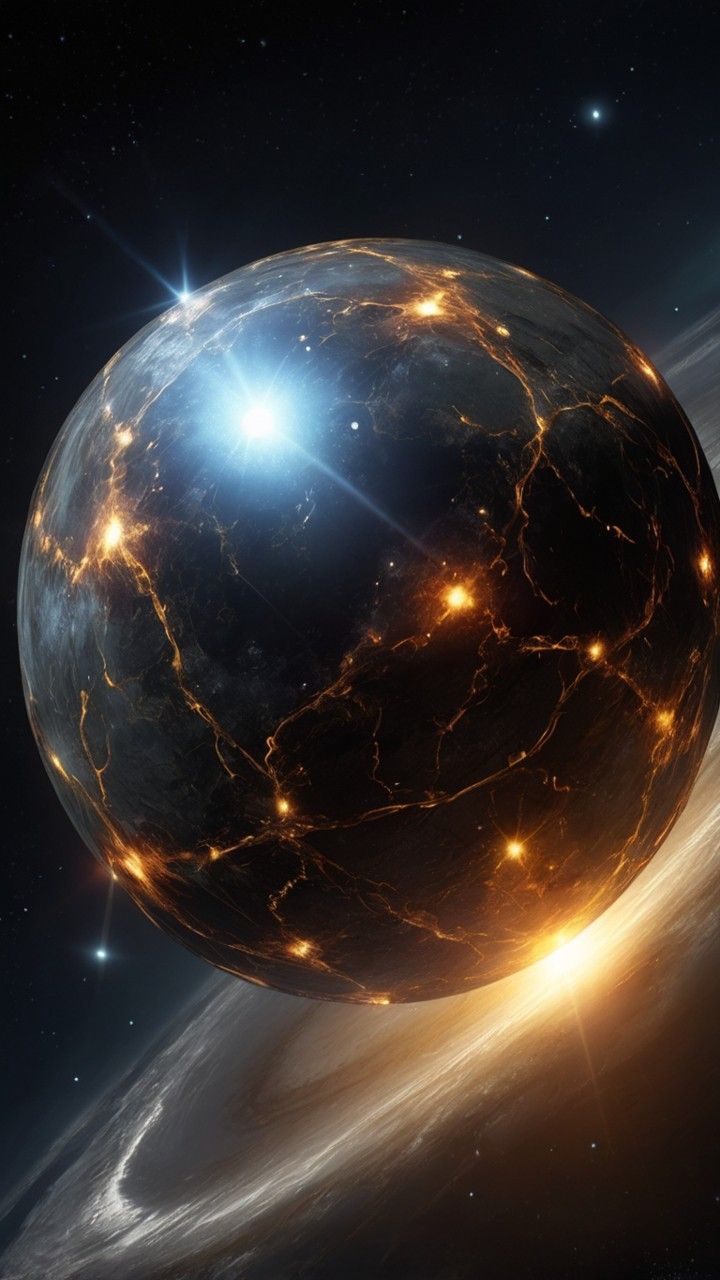
Riven Shroud is a massive Dyson sphere technostructure built around a low-grade star that serves as its primary power source. The sphere consists of continent-wide modules of strange architecture interspersed with vast solar sails that harness and redirect the star's enormous energy output. However, the structure's damaged nature is immediately apparent—an enormous rent mars the surface, leaving thousands of miles of the sphere open and vulnerable to the surrounding vacuum of space. The sphere's origins remain a mystery, with scholars unable to identify who built it or for what purpose. The architecture matches no known species' style and appears designed for creatures that had no need for doors, windows, or other physical portals, suggesting the builders could teleport through solid objects. Leading theories propose it once housed a colony, served as a haven for creatures escaping a dying world, or contained offworld research facilities. Three rare humanoid species—aatevaks, qotrauas, and xixinnts—claim to be descendants of the Parents who built Riven Shroud, though their lack of teleportation abilities casts doubt on these claims. All three species have physiologies partially adapted to vacuum, similar to sarcesians, allowing them to survive brief exposure to space. The structure has no central government, instead hosting insular settlements focused on survival. Life-support systems function with varying reliability across different zones: near the rent, systems are entirely obliterated, requiring environmental suits; in middle zones, life support functions erratically with unpredictable malfunctions; in areas farthest from the rent, systems work reliably, though these regions have an eerie, semi-abandoned atmosphere. Riven Shroud attracts a diverse population including outlaws avoiding law enforcement, scavengers mining precious metals near the sun, scientists studying the sphere's power systems, and researchers fascinated by the ancient technology. The out-of-the-way location and dangerous conditions make it an ideal haven for those seeking isolation or fortune.
Szandite Collective
Ancient Network of Peaceful Collaborators
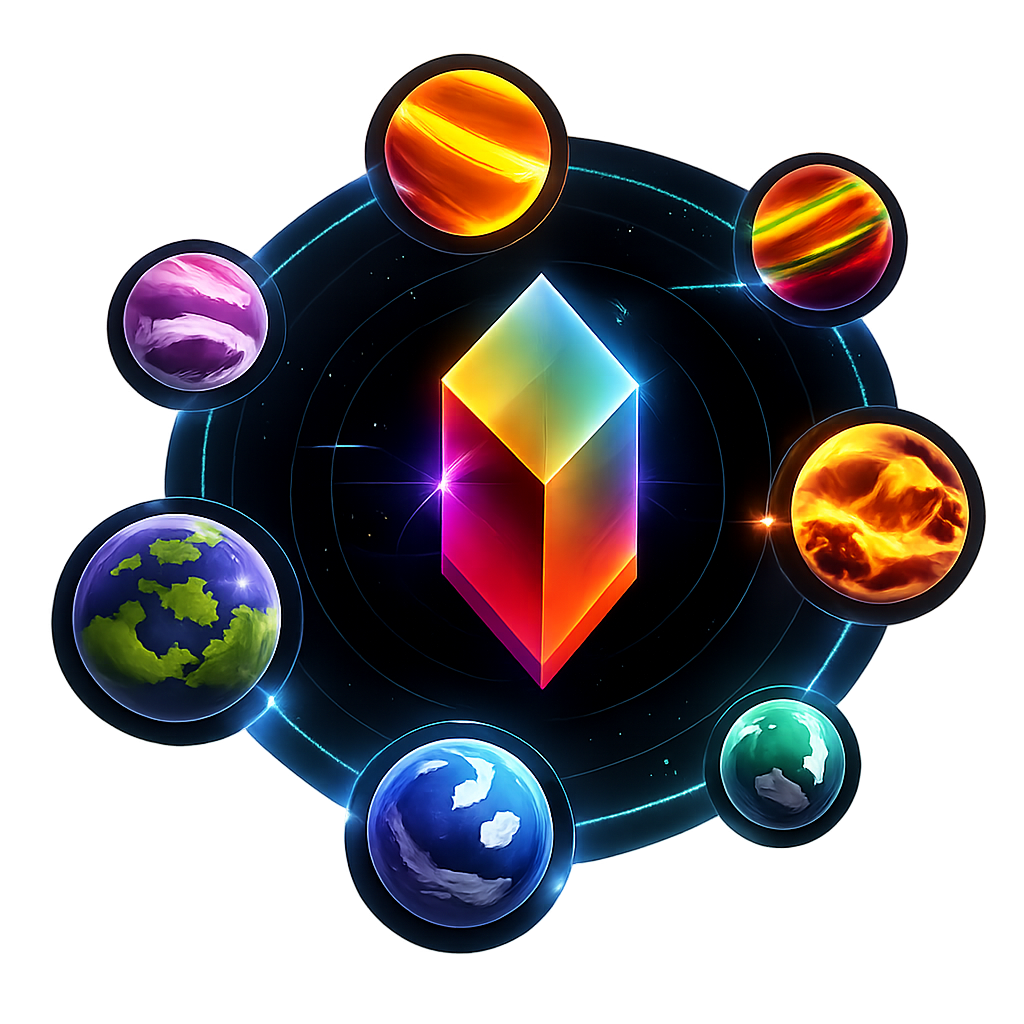
The Szandite Collective is a unique political alliance of seven planets located across four different but adjacent solar systems in a remote corner of Near Space. Despite vast distances separating them, these worlds formed a collaborative governmental organization hundreds of years before the Gap—long before any had mastered interstellar spaceflight. This seemingly impossible alliance was enabled by a mysterious phenomenon: thousands of years ago, regular meteor showers peppered each of these seven worlds over several months, dropping dozens of enormous magical crystals onto each planet. These crystals, ranging from a few feet to nearly a mile in dimensions, were formed from colorful mineral combinations found nowhere else in their respective solar systems. Through independent research efforts, each planet's population discovered that the crystals provided magical interstellar communication—allowing speech and mental images from individuals touching any crystal to flow to all other crystals across all seven worlds. Each crystal also contained records of all communication that passed through it, accessible through touch and mental focus. After decades of collaborative translation and coordination, the planets made contact, determined their relative locations, and named the crystals szandite—an amalgamation of each planet's native name for the phenomenon and symbol of their friendship. They formally established the Szandite Collective to facilitate mutual learning, scientific advancement, and military-cultural alliance. The Collective's peaceful nature and lack of means for interplanetary war strengthened their bond. When the Gap ended, the Collective possessed a distinct advantage: centuries of shared knowledge through the szandite network. This collaborative information base enabled rapid, synchronous advances in societal systems and technology, practically eliminating armed conflict on member worlds. Upon developing starships, they focused on research and exploration, particularly seeking clues to the crystals' mysterious origins. Their practical isolationism has proven increasingly difficult as they've expanded into Near Space and realized their vulnerability to militaristic species. Recently, they've begun sharing technology and information with non-Collective species to secure allies for protection and research assistance. However, they absolutely refuse to trade szandite crystals themselves, as the material and communication records may contain answers to their civilization's greatest mystery. The Collective once numbered eight planets—a dedicated branch still searches for Krethiskar, a former member that fell silent before the Collective achieved interstellar travel. Recently, researchers discovered encrypted pleas for help embedded in ancient Krethiskar messages, dating to the Collective's earliest days. Neither the reason for these messages nor the cause of their cessation is known, putting the entire Collective on edge.
Tabrid Minor
Rapidly Industrializing Copaxi Home World
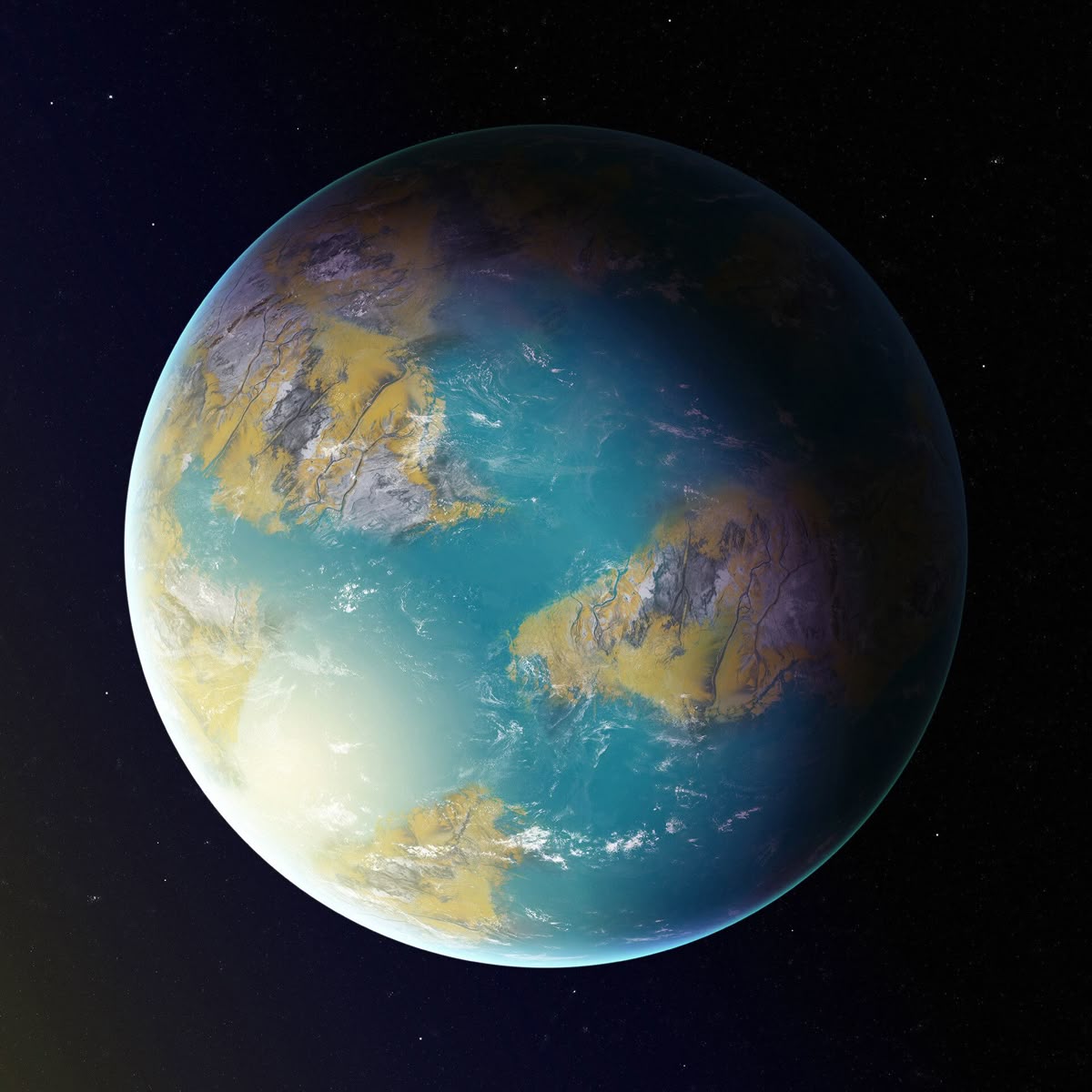
Tabrid Minor is heavily industrialized with settlements blanketing its four large landmasses. When Pact Worlds explorers first encountered the developed planet, their readings indicated nearly depleted resources, sharply declining biodiversity, erratic weather systems, and inexplicably floating citadels. The coral-like copi are central to both Tabrid Minor's success and troubles. Copi once covered much of the planet's surface, drawing energy from the nearby orange star while attuning to gravitational forces. From these evolved the intelligent copaxis—humanoid colonies of specialized polyps comprising every feature of their bodies. This specialization translates to copaxi society, with wealth concentrated in few individuals who control regional governments, closely regulate technological developments, and maintain strict control of culture and history. Few know that copaxis once enjoyed lavish, peaceful lives in magically buoyant cities. Their magic stemmed from mystical bonds with copi and its supernatural gravitational affinities, which they cultivated to keep citadels aloft, power homes, and feed people. Their civilization prospered for centuries, seemingly even during the Gap. However, the Signal changed copaxi society forever in 3 AG. Inspired by Triune-granted technology, copaxi innovators discovered how to refine copi into semi-organic alloy suitable for building Drift engines, starship hulls, and machines. Technological innovators increasingly pushed back against magical traditionalists, who attempted to quash these threats to the status quo. At last, conflict exploded into armed warfare that shattered the aristocracy and copaxis' reliance on magic. The new government harvested dense copi that powered flying cities and abandoned the slowly sinking wonders. Copaxis settled Tabrid Minor's fertile surface and, rather than using the Signal to take to the stars, used newfound knowledge to industrialize. For three centuries they harvested and refined copi, devastating the keystone species and diminishing their own mystical connection to the planet. Undeterred, they turned to robots to expedite mining and construction, only to eradicate most robots when machines began developing sentience. Copaxis are slowly realizing their rapid industrialization inflicted catastrophic and possibly irreversible damage to ecosystems and weather patterns, and tensions between common people and wealthy elites rise yearly. In recent decades, using capital and resources from an anonymous corporate sponsor, a coalition of regional governments began pursuing space travel, hoping to save their people by identifying new resources or worlds to colonize. However, exploration only increased Tabrid Minor's vulnerability to threats like the Veskarium and the Swarm. The planetary government has applied for Pact Worlds protectorate status, though the petition remains pending.
Ulthel
Deceptively Welcoming Gas Giant
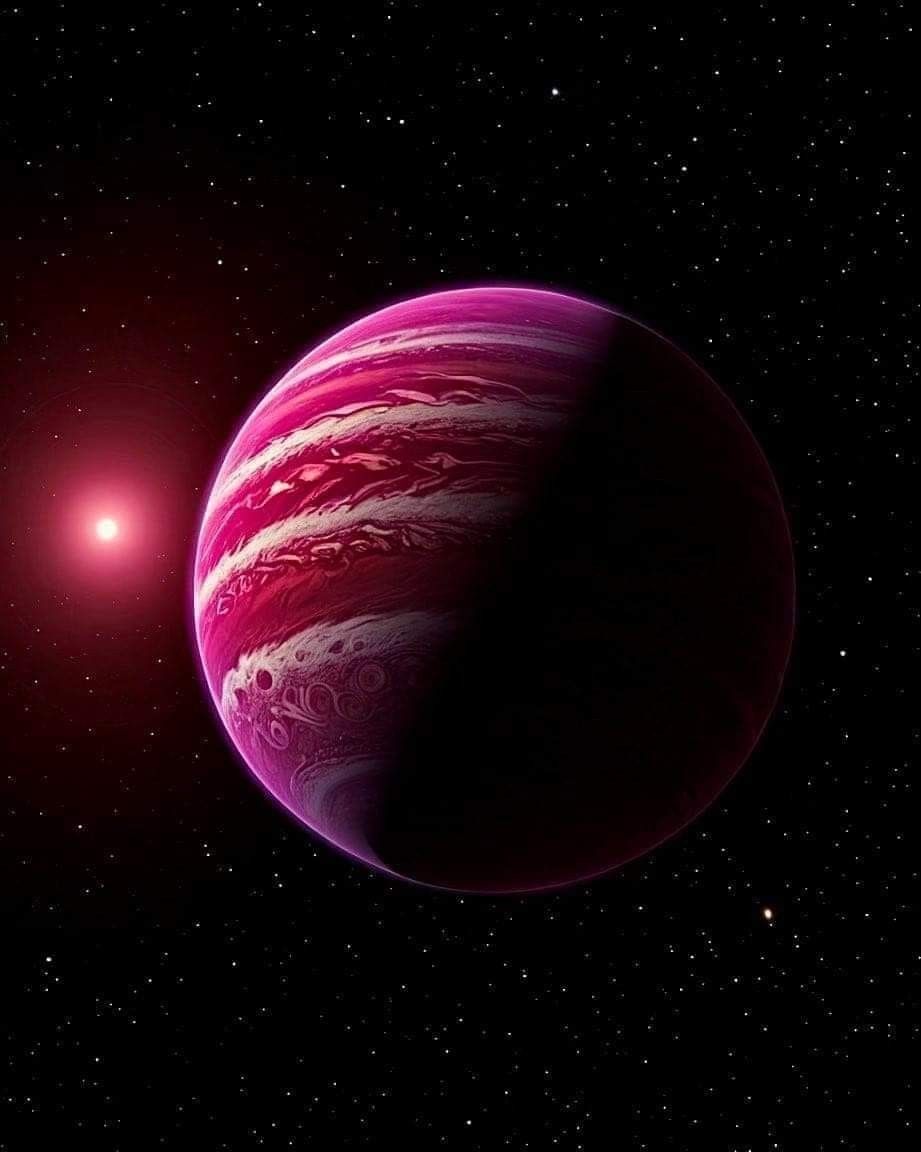
The gentle giant Ulthel shines like a pink pearl against the void of space, its gently drifting gases swirling lazily in ever-changing textures. From an offworld explorer's viewpoint, the planet might seem beautiful but probably lifeless, as it boasts no solid ground, and its dominant gases are a toxic cocktail of hydrogen, helium, and methane. However, jellyfish-like creatures called ulthelim—and only these creatures—call the planet home, serving as a strange cautionary tale to any who dare venture close. Despite the toxic nature of the planet's depths, Ulthel's upper atmosphere is comfortably breathable by most intergalactic standards. In the early days following the Gap, this made the planet attractive to governments and corporations seeking to harness and refine Ulthel's nearly infinite natural gases. Exploratory and colonial contingents from varying offworld locations set off for the gas giant, but one by one, these groups disappeared. Some seemingly blinked out of existence upon hovering above the planet's toxic layers. Others set up research posts or refining stations deeper within the gases, operating without issue until, seemingly at random, they ceased all communication with parent organizations. In these early days, all explorers reported that the planet—and previous visitors' structures—were uninhabited. As years stretched on, visitors to Ulthel, all eventually as ill-fated as predecessors, began reporting enormous schools of what looked like pink jellyfish with no tentacles migrating in clouds within the gases. Visitors called them ulthelim and considered them non-sentient local fauna. Soon, though, all visitors began reporting hearing mental pleas from these jellyfish—in a single cacophonous voice, the choruses begged visitors to partake of the planet's wisdom, to merge with the clouds of ulthelim, and to become one with the planet. In all instances, ulthelim referred to themselves and the planet as a single entity. These were always the last reports visitors logged before they disappeared without a trace. In the current day, most governments and corporations have stopped all operations concerning Ulthel. Although it's unclear what mysteries the planet holds, most scientists speculate that the planet's ulthelim are actually made up of the transformed bodies of offworld explorers who dared enter the planet's atmosphere. Logs of previous expeditions confirm this theory, as the number of ulthelim sightings reported correlates to the number of scientists, researchers, colonists, and others who attempted to conduct business near the gas giant's perilous depths. It's unclear exactly how long it takes for a visitor to Ulthel to transform into an ulthelim, though reports have ranged from a few weeks to a few months. Most believe the physical and mental transition is gradual, with visitors' bodies slowly becoming more shapeless, gelatinous, and pink—while their minds simultaneously become more in tune with the practically transcendent nature of the ulthelim's collective consciousness. To some, visiting the planet is a surefire death sentence. To others, the transformative nature of ulthelim represents a blueprint of utopia. To still others, the gas giant holds a potential gold mine of riches and scientific secrets worth braving any risk.
Varturan
Bustling Waterways of Peace
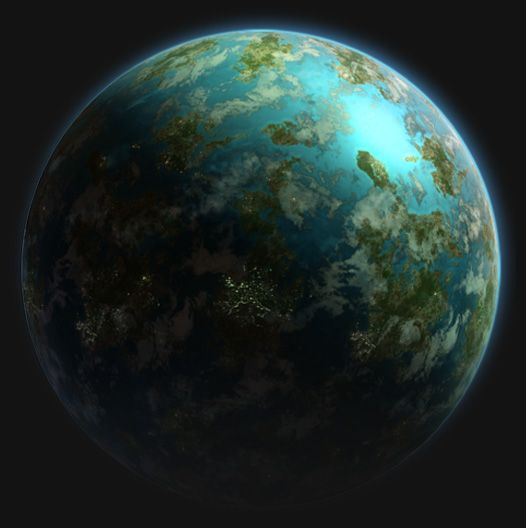
The countless waterways of Varturan are home to numerous water-dwelling creatures, both sentient and not. The massive oceans, lakes, and rivers constantly ebb and flow in concert with the orbit of the planet's two moons, Arrtinos and Rydnan. Their powerful gravitational pulls cause constant and dramatic shifts in the planet's tides, with water rising hundreds of feet in some places. These major shifts occur at regular intervals of about six hours and have created extremely waterlogged environments that flourish with the aid of the tidal rhythm. The planet is home to large swamps, seas of quicksand, aquatic forests, and countless unique niches and localized ecosystems in the depths of Varturan's seas and lakes. Even pockets of land scattered around the planet are intrinsically connected to the world's waters—lands that rise high enough or are large enough to avoid total submersion beneath Varturan's tides are still subject to constant light rains. It's no surprise that Varturan's inhabitants are well-adapted to life in and around water. Some live within the planet's seas, including grejonns, a crustacean people with toad-like heads who construct massive palaces of stone and coral under the waves and occasionally interact with the surface. Others live on land and use their natural abilities to live off the bounty of Varturan's oceans, such as otter-like brenneris, whose floating domiciles rise and fall with the tides but are generally anchored in place. Regardless of their home, Varturan's sentient species live in harmony with the wildlife and one another, thanks in part to a worldwide federation formed in 14 AG. At that time, scientists of one nation-state discovered a very serious decay in Arrtinos's orbit. They determined it would collide with Rydnan within a few decades, wreaking incalculable damage to their homeworld's ecosystem. With this knowledge in hand, the nation-state reached out to neighbors in hopes of finding a solution to the impending apocalypse. While initial attempts failed, the various political entities eventually formed the Coalition of Conservation, a united research effort to correct Arrtinos's orbit. With a combination of technology and magic, the Coalition's efforts proved successful in 27 AG. The Coalition has remained in place since then, transitioning into the planet's acting governing body less than a decade later. Today, the Coalition's members consider maintaining Varturan's environmental balance one of the body's most important functions. Rather than continuing to advance various technologies on the planet proper, the Coalition built a pair of moon bases to serve as technological hubs staffed by all of Varturan's sentient species. While the world's nation-states retain a modicum of autonomy and can generally act as they see fit, the Coalition is empowered to intercede in cases of major conflict. Fortunately, no such incidents have occurred in Varturan's recorded history.